— Harmony Journal · Desk Work & Pain
Acupuncture for Desk-Job Neck and Back Pain a Tysons evidence check.
Half of Tysons works at a screen. Here is what the research actually supports — and what it doesn't — when the neck and low back start keeping score.
Quick answer
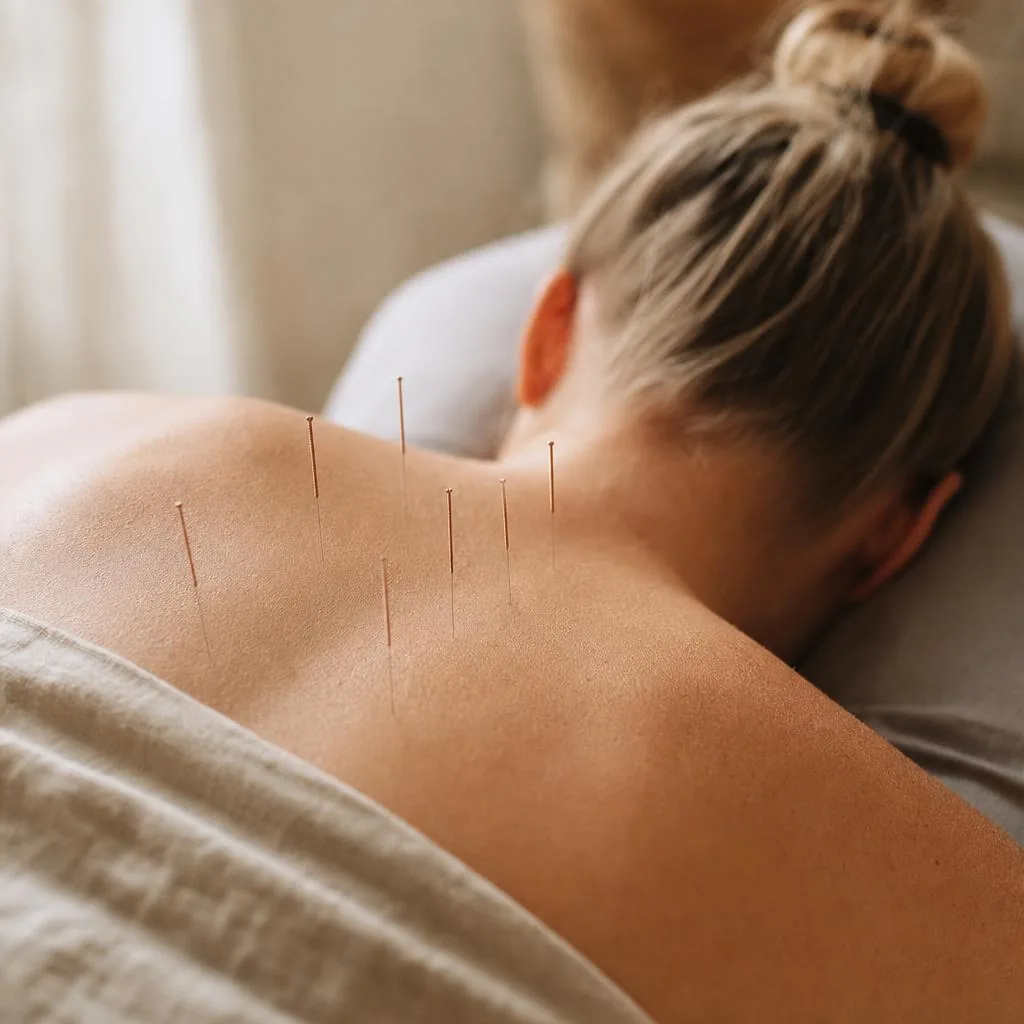
Acupuncture for desk-related neck and back pain is a drug-free treatment in which a licensed acupuncturist places thin sterile needles at points along the neck, shoulders, and spine, usually for 30 to 60 minutes per session. At Harmony Acupuncture & Wellness Spa in McLean — about 10 minutes from Tysons Galleria via Route 123 — an initial 60 minute session is $150, follow-ups are $100, and a package of 5 sessions is $400, which works out to $80 per visit. Research suggests acupuncture may help chronic neck and low back pain, though reviewers describe the average effects as modest.
- Focus
- Neck, shoulder & low back pain
- Evidence
- May help chronic pain; modest effects
- From Tysons
- About 10 minutes via Route 123
- Initial visit
- $150 · 60 minutes
— 01
The neck pain didn't start at the gym. It started at the desk.
In 2002, 1.0 percent of American adults told the CDC's National Health Interview Survey they had used acupuncture in the past year. By 2022, that figure had more than doubled to 2.2 percent — and pain management drove close to half of that growth. Acupuncture for neck and back pain, in other words, is no longer a fringe experiment. It is one of the most common reasons Americans see a licensed acupuncturist at all.
Tysons is a case study in why. Census estimates put roughly 34 percent of Tysons workers at home at least part of the week, and most of the rest commute by car to a desk near Tysons Galleria, the Capital One campus, or one of the towers along the Silver Line. Either way the posture is the same: head forward, shoulders rounded, eight to ten hours of screen time broken up by meetings that are also screens. Physical therapists have a name for the resulting pattern — upper crossed syndrome. Most people just call it their neck.
The complaints that reach our clinic on Chain Bridge Rd, about 10 minutes south of the Galleria on Route 123, are remarkably consistent. A right shoulder that burns by 3 PM. A low back that seizes after a long crawl on the Beltway. Headaches that start at the base of the skull and creep forward over the ears. None of this is mysterious. These are load problems: small postural muscles doing static work for hours, day after day, year after year, with no counter-movement to balance the ledger.
So the honest question is not whether desk work produces this pattern — that much is well documented — but whether acupuncture actually helps once it has. That question now has decades of research behind it, and the answer is more interesting, and more modest, than either the enthusiasts or the skeptics tend to admit.
— 02
For chronic neck and back pain, the evidence is real — and modest.
Start with the strongest ground. The National Center for Complementary and Integrative Health (NCCIH), the federal agency that funds and reviews research on practices like acupuncture, concludes that acupuncture may help several chronic pain conditions — chronic low back pain, neck pain, and osteoarthritis among them. That phrase, may help, is not a marketing hedge. It is the agency's own language, and it sits on top of a large body of controlled trials.
The most influential analysis pooled individual patient data from dozens of trials covering more than 20,000 chronic pain patients. It found acupuncture outperformed both usual care and sham acupuncture. The catch — and researchers are upfront about it — is the margin. The advantage over sham needling was statistically reliable but small. Reviewers routinely reach for phrases like "small effect sizes," and they grade portions of the literature "low-quality evidence," because blinding the acupuncturist is impossible and blinding the patient is hard.
Clinical guidelines have digested all of this in a telling way. The American College of Physicians' 2017 low back pain guideline lists acupuncture among recommended first-line non-drug options for chronic low back pain, alongside exercise, heat, and mindfulness-based approaches — largely because the risk profile is favorable even where the average benefit is moderate. For neck pain specifically the trial base is smaller, but systematic reviews point the same cautious direction: many patients report meaningful relief, and the honest qualifier is that studies are mixed in quality.
Desk-related headaches deserve a footnote of their own. Tension-type headaches — the band-of-pressure kind that neurology resources link to stress and muscle tension among other triggers — often travel with a tight neck, and trials of acupuncture for frequent tension-type headache are among the more encouraging in the field, with the usual caveats about study quality attached. If your headaches arrive together with the 3 PM shoulder burn, they are likely part of the same load problem, and they tend to be addressed in the same sessions.
Chronic is the operative word
Notice what keeps recurring: chronic. The evidence for acupuncture in long-standing pain — the kind measured in months and years, which is exactly what desk posture produces — is considerably stronger than for fresh injuries. If you wrenched your back yesterday moving a couch, the research has much less to say. If your neck has ached most workdays since 2023, you are the population these trials actually studied.
— 03
Felt benefit and proven treatment are two different things.
Here is the part most clinics won't spell out, and the part worth understanding before you spend a dollar. In many trials, patients receiving sham acupuncture — needles placed at deliberately wrong points, or retractable devices that never pierce the skin — also improved, often substantially. The gap between real and sham needling is real but narrow; the gap between acupuncture and doing nothing at all is much wider.
Skeptics compress that into "it's placebo." That is too quick, but the honest version is not much longer: some of what people feel after acupuncture likely comes from expectation, from focused attention, and from lying still in a quiet room for 30 minutes — an experience modern office life otherwise never provides. Some of it may come from the needling itself; researchers hypothesize local blood flow changes and the release of endorphins and other neurotransmitters, though the mechanism is far from settled.
Does the distinction matter to your Tuesday-afternoon neck? Arguably less than it matters to a journal editor. Relief that arrives reliably, safely, and without medication is not nothing, whatever its pathway. But you deserve to hold both facts at once: many patients find genuine relief, and the measured advantage over sham treatment is modest. Any clinic promising to fix your neck in three sessions is selling past the evidence.
What acupuncture cannot do is equally clear. It will not reverse disc degeneration, shrink a herniation, or stand in for a medical workup when symptoms suggest something beyond muscle and joint strain. It is a management tool — at its best, one piece of a plan that also includes movement, strength work, and a saner workstation.
The practical move, then, is to treat your own case as a small trial. Before your first visit, write down a baseline: pain at 9 AM and at 4 PM on a 0-to-10 scale, how many days this week you reached for ibuprofen, how your sleep held up. Recheck the same numbers at visit 4. Figures you recorded in advance are the antidote both to wishful thinking and to premature quitting — and any practitioner confident in their work will welcome them.
— 04
Cupping deserves its own honest paragraph.
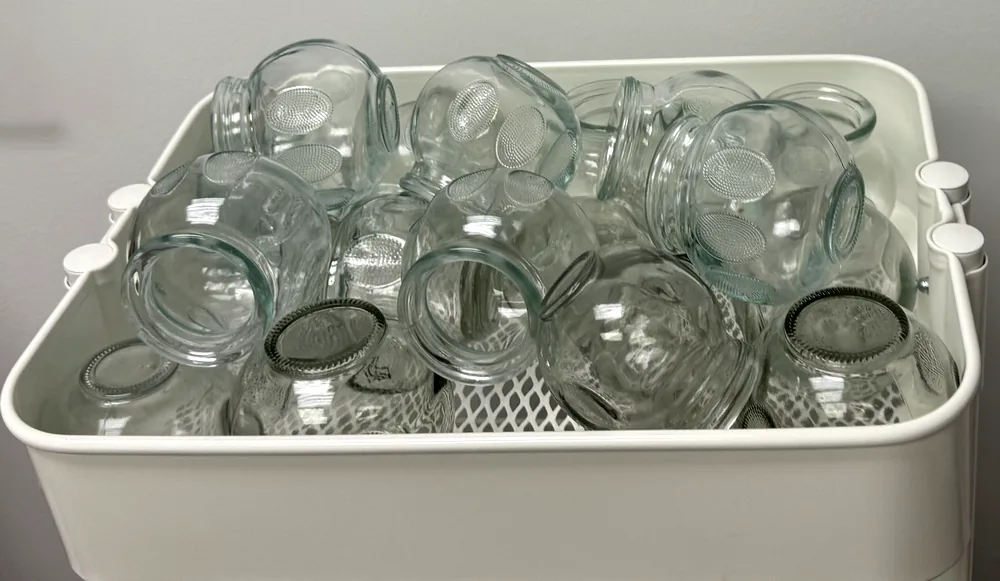
Desk workers ask about cupping constantly, usually after spotting the circular marks on an Olympic swimmer or on a coworker back from a spa weekend. The technique is simple: glass or silicone cups create suction on the skin, typically across the upper back and shoulders, drawing blood flow into tissue that spends all day under static tension. Many patients describe the after-feeling as a looser, warmer version of the same shoulders they walked in with.
The evidence file is thinner than acupuncture's, and NCCIH says so plainly: studies suggest cupping may reduce some kinds of musculoskeletal pain, but the research is limited and much of it is of low quality, so firm conclusions are not possible. Treat cupping as a plausible, low-risk adjunct — not a proven therapy. The marks, for what it is worth, are not bruises in the injury sense; they typically fade over several days to two weeks.
At Harmony, cupping therapy in McLean is offered as a standalone TCM service and as a $20 add-on to any 60 minute massage — free for members. Our practitioners have used it for years on exactly the population this article is about: people whose trapezius muscles have quietly fused into a shelf.
One practical note. Cupping marks can sit above a collar line for a week or so. If you have a wedding, a keynote, or a headshot session on the calendar, say so — cups can be placed lower to keep marks out of sight.
— 05
Here's what neck pain care looks like on Chain Bridge Rd.
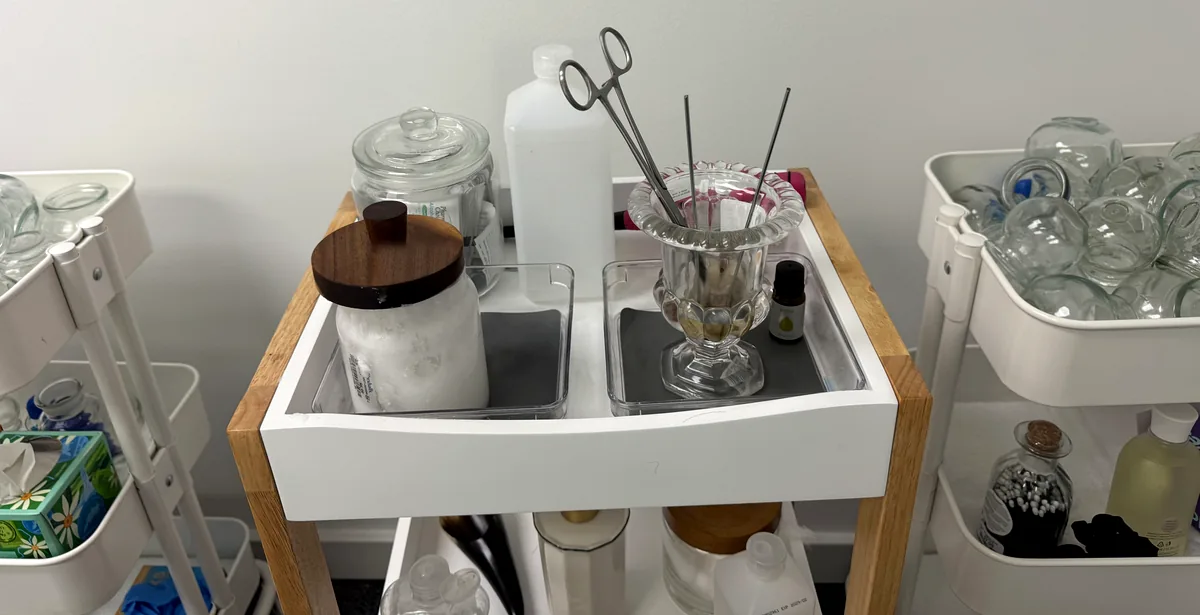
Evidence talk is abstract; scheduling is not. At our clinic serving Tysons — 1481 Chain Bridge Rd, Ste 300, McLean, straight down Route 123 from the Galleria — care for desk-related pain starts with a 60 minute initial session: a health history, a look at your posture and movement, then your first treatment. Follow-ups run 30 minutes, which is what makes a lunch-break visit from Tysons realistic. The clinic is open 9 AM to 9 PM, seven days a week, with free parking at the door — no garage spiral required.
| Visit type | Length | Price |
|---|---|---|
| Initial acupuncture session | 60 minutes | $150 |
| Follow-up session | 30 minutes | $100 |
| Package of 5 sessions | 30 minutes each | $400 — $80 per visit |
Cadence is individual, but a common pattern for chronic neck and shoulder tension is 1 to 2 visits per week at the start, tapering as symptoms change, with an honest reassessment around visit 4 to 6. Our practitioners are licensed, with 15+ years of practice and 5,000+ clients served — and part of that experience is recognizing when acupuncture is not the right tool and saying so out loud.
On insurance: we accept major insurances like UnitedHealthcare and Aetna, and chronic pain diagnoses are among the more commonly covered uses of acupuncture — though every plan differs, so verify before assuming. Text your policy info to 240-715-5939 for a free benefits check. Full self-pay numbers live on our acupuncture pricing page, and the deeper clinical dive is on our acupuncture for neck and shoulder pain page — including how needling and cupping are combined for desk-work tension.
— 06
Your workstation still matters more than any needle.
No credible acupuncturist will claim needles can out-treat eight daily hours of bad ergonomics. The research on posture interventions is its own messy field, but a few low-cost changes have sensible mechanics behind them and cost almost nothing to try:
- Raise the screen. Top third of the monitor at eye height. A laptop alone all but guarantees forward head posture; a cheap stand plus an external keyboard fixes most of it.
- Move every 45 minutes. Static load is the enemy, and 60 seconds of walking or shoulder rolls interrupts it. Calls you can take by phone can be calls you take on foot.
- Bring the work to you. Elbows near the ribs, wrists neutral, feet flat. Reaching for a mouse all day is a slow-motion shoulder strain.
- Warm up before you load up. If your lifting window is 6 AM, give a stiff morning back a few minutes of easy movement before the barbell.
And know the red flags that mean this has stopped being a wellness question: progressive weakness in an arm or leg, numbness that spreads, pain after a fall or car accident, unexplained weight loss alongside back pain, or any change in bowel or bladder control. Those symptoms need a physician promptly — not after a package of sessions. Acupuncture can wait; a neurological workup should not.
— 07
Three next steps, none of them dramatic.
- Audit your desk today. Screen height, elbow position, one recurring 45 minute movement alarm. Free, immediate, and it makes any treatment you try work better.
- Give acupuncture a fair, finite trial. Book an initial 60 minute session, commit to 4 to 6 visits, and judge by your own results rather than anyone's promises. Same-week appointments are usually available, and evenings run until 9 PM.
- Escalate honestly. If pain is worsening, radiating, or paired with any red-flag symptom above, start with your physician instead. We regularly see patients alongside physical therapy and primary care — that combination is often the point.
This article is general health education, not medical advice. It summarizes research findings and typical clinical practice; it does not diagnose any condition or promise any outcome. Acupuncture supports — it does not replace — evaluation and care from your physician.
— Questions
Asked & answered.
How many acupuncture sessions does desk-related neck pain usually take?
Does insurance cover acupuncture for neck or back pain?
Can I fit a session into a Tysons lunch break?
Is acupuncture safe for neck pain?
— Research & references
NCCIH — Chronic Pain and Complementary Health Approaches
Reviews suggest acupuncture may help chronic back and neck pain, though its advantage over sham treatment is often small.
NCCIH — Cupping: What You Need To Know
Cupping may ease some musculoskeletal pain, but the evidence base is limited and much of it is low quality.
NCCIH — Traditional Chinese Medicine: What You Need To Know
An overview of TCM practices, noting promising findings for some conditions alongside significant gaps in the research.
Citations are summarized — please consult the original sources. This page is general health education, not medical advice for your specific case; results vary and acupuncture works best alongside, not instead of, care from your physician.
— Keep exploring
Condition
Acupuncture for Neck & Shoulder Pain
Tech neck, desk tension, and how treatment plans are built.
Location
Acupuncture Near Tysons Corner
10 minutes from the Galleria — lunch-break and after-work visits.
Service
Cupping Therapy
How cupping works, what the marks mean, and add-on pricing.
Pricing
Acupuncture Pricing in McLean
Every price on one page — sessions, packages, and add-ons.