— Women's Health · McLean, VA
Acupuncture for Menopause Symptoms in McLean, VA
Hot flashes in the middle of a meeting, night sweats at 3 AM, a temper that no longer feels like yours. Here is what acupuncture can honestly offer through perimenopause and menopause, what the research does not support, and why your gynecologist stays in charge.
Quick answer
Acupuncture for menopause symptoms is the use of fine sterile needles, in a first visit of 60 minutes and follow-ups of 30 minutes, as an optional supportive layer for the hot flashes, night sweats, broken sleep and mood changes of perimenopause and menopause. At Harmony Acupuncture & Wellness Spa, 1481 Chain Bridge Rd, Ste 300, McLean, VA, the first visit is $150, follow-ups are $100, and a package of 5 sessions is $400 — $80 per visit. We are open 7 days, 9 AM to 9 PM. The Menopause Society does not recommend acupuncture for hot flashes, so we offer it alongside your gynecologist's care, never instead of it.
- First visit
- $150 · 60 minutes
- Follow-up
- $100 · 30 minutes
- 5-session package
- $400 · $80 per visit
- Hormone decisions
- Stay with your physician
— 01
What Menopause Symptoms Actually Look Like

Menopause symptoms rarely arrive as one clean event. Menopause itself is a date you can only name in hindsight — the point at which you have gone 12 months without a period, most commonly between ages 45 and 55 — while the symptoms people actually seek help for usually start years earlier, during perimenopause, and can continue long after.
Perimenopause, menopause, postmenopause
MedlinePlus, the National Library of Medicine's consumer health site, describes perimenopause as usually beginning in your 40s, sometimes earlier, and lasting several years. Periods turn unpredictable: shorter or longer, lighter or heavier, closer together or further apart. Once 12 months pass with no period, you have reached menopause; the years after are postmenopause. That line matters for one practical reason, covered under red flags below: bleeding means something different after it.
The symptoms that bring people in
- Hot flashes — a sudden wave of heat through the chest, neck and face, often with flushing and sweat, then a chill as it passes.
- Night sweats — the same event during sleep, sometimes enough to change the sheets.
- Broken sleep — waking at 2 or 3 AM, with or without a sweat, and lying awake afterwards.
- Mood changes — irritability, low mood, a shorter fuse, or anxiety that feels new.
- Vaginal dryness and bladder changes — real and common, and squarely a conversation for your gynecologist rather than for us.
Hot flashes and night sweats, grouped in medical writing as vasomotor symptoms, are the most common of these. The Menopause Society's 2023 position statement reports them in up to 80% of menopausal women, lasting 7 to 9 years on average and more than 10 years for about a third. That timeline is why "just wait it out" is thinner comfort than it sounds, and why it is worth knowing every option — including the ones with much stronger evidence than acupuncture.
Our page on women's health and perimenopause symptoms covers the transition alongside cycles, premenstrual syndrome (PMS) and polycystic ovary syndrome (PCOS) support. This page stays on menopause itself: what the research says, where it runs out, and where needles can sensibly sit in a plan someone else leads.
— 02
What the Research Shows — and Its Limits
The research on acupuncture for hot flashes splits cleanly in two. Compared with no treatment or usual care, acupuncture has repeatedly been linked to fewer and milder hot flashes. Compared with sham acupuncture — needles at off-target points, or blunt needles that never pierce the skin — the difference largely disappears. Which comparison you trust decides how you read the whole field.
What NCCIH reports
The National Center for Complementary and Integrative Health (NCCIH), part of the National Institutes of Health, puts it plainly. In studies against no treatment, acupuncture reduced the frequency and severity of hot flashes. In studies against simulated acupuncture, including a 2016 trial from Australia, there was no difference between the two. NCCIH adds that acupuncture appears to be less effective than hormone therapy at reducing how often hot flashes happen.
A 2016 US study highlighted by NCCIH shows why the debate persists. 209 women aged 45 to 60, each having at least 4 hot flashes or night sweats a day, received up to 20 treatments from licensed acupuncturists and were compared with women receiving usual care. Hot flashes eased and measures of sleep and anxiety improved, with benefits appearing after about 3 treatments and lasting 6 months after care ended. The researchers themselves cautioned that some, or even all, of that benefit could come from expectation and the care and attention involved rather than from the needles.
The Menopause Society's 2023 position
The Menopause Society's 2023 nonhormone therapy position statement — published under its former name, the North American Menopause Society — does not recommend acupuncture for hot flashes and night sweats. Its review found acupuncture eased some broader menopause-related symptoms, such as mood, sleep and pain, but showed little to no clinical benefit for hot flashes once compared with sham. The same statement names hormone therapy the most effective treatment and lists the non-hormone options it does recommend:
| Option | 2023 view on hot flashes | Who to talk to |
|---|---|---|
| Hormone therapy | The most effective treatment; should be considered for women under 60, within 10 years of their final period, without contraindications | Your gynecologist or primary care physician |
| Cognitive behavioral therapy (CBT) and clinical hypnosis | Recommended (Level I evidence) | A therapist, often by physician referral |
| Non-hormone prescriptions: SSRIs and SNRIs (selective serotonin and serotonin-norepinephrine reuptake inhibitors), gabapentin, fezolinetant, oxybutynin | Recommended | Your physician |
| Acupuncture | Not recommended for hot flashes — little to no benefit over sham | Optional; tell your physician you are using it |
| Supplements and herbal remedies | Not recommended | Your physician or pharmacist — we do not sell or dispense any |
So why offer it at all?
Because the reading of that evidence is "not shown to beat sham for hot flashes", not "harmful". NCCIH describes acupuncture as generally safe when performed by an experienced practitioner using sterile needles. Some people cannot take hormones, some have chosen not to, and some already follow their physician's plan and want a quiet, low-risk hour aimed at how they feel. That is the role we offer it in: optional, supportive, and judged against your own notes.
A page that promises acupuncture will "balance your hormones" or stand in for hormone therapy is selling, not summarizing.
— 03
How We Use Acupuncture Alongside Your Gynecologist
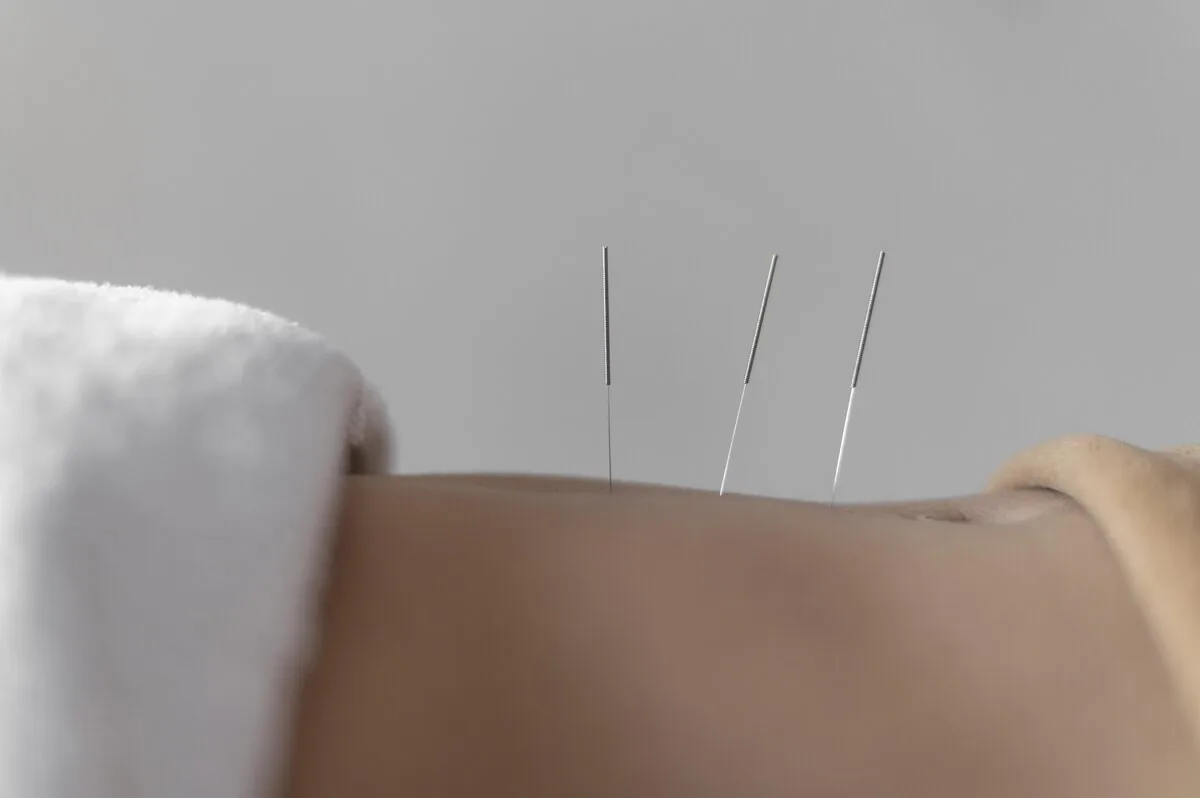
Acupuncture for menopause symptoms works best here as one layer in a plan your gynecologist leads. Hormone therapy and prescription decisions belong to your physician, and we never suggest starting, stopping or changing a medication. What we add is a regular appointment, a careful history, and an honest check on whether the sessions are making any difference to you.
What a session involves
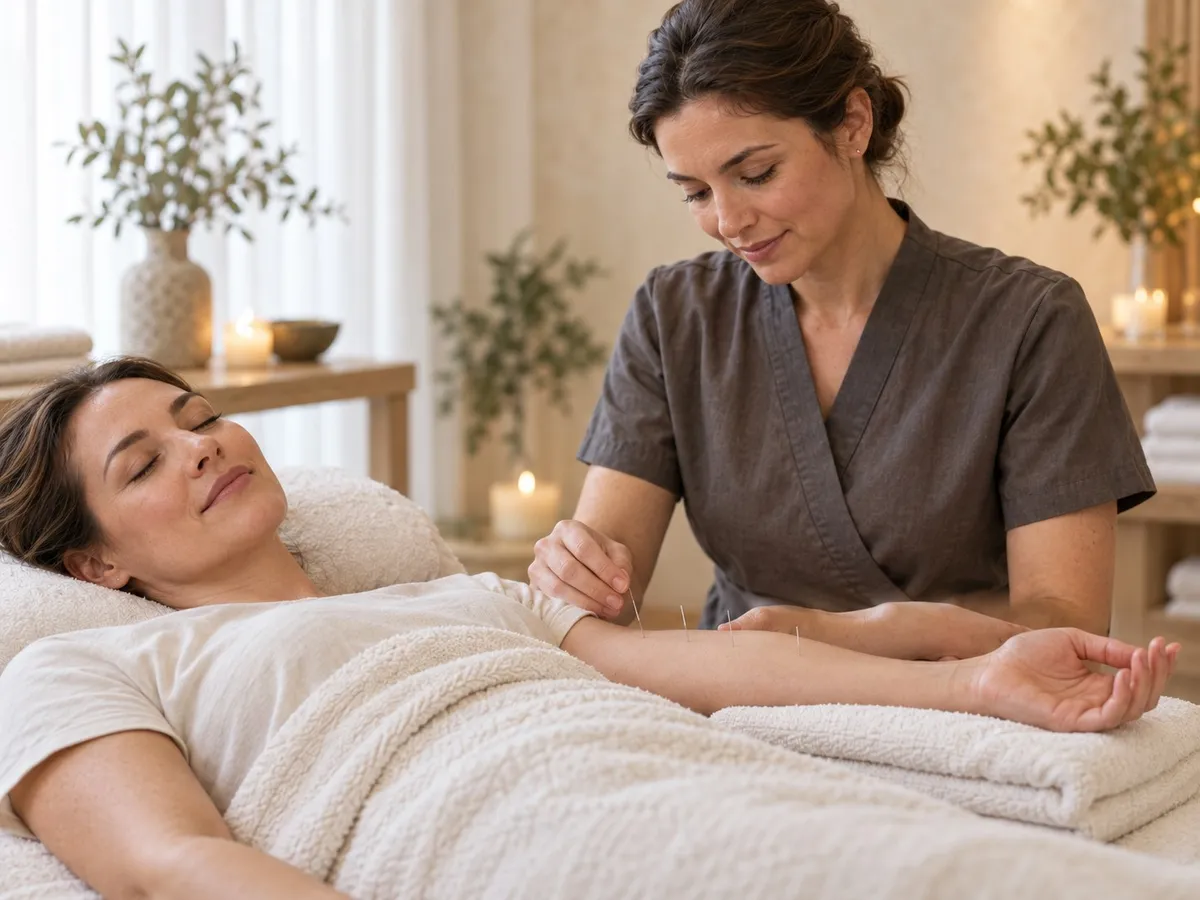
The first visit is 60 minutes for $150: a conversation about your cycle history, symptoms, sleep and medications, then a first treatment. Follow-ups are 30 minutes for $100. Fine, single-use sterile needles go in at points on the arms, lower legs and sometimes the abdomen while you rest. Traditional Chinese Medicine (TCM) describes this transition in its own vocabulary — heat rising at night, a cooling reserve running low — and our licensed practitioners use that map to choose points. It is a framework, not a lab result.
What to bring to the first visit
- Two weeks of notes. Hot flashes by day, night sweats, the hour you wake, and a 1 to 10 score for mood. A phone note is fine; it becomes the baseline we measure against.
- Your medication list. Hormone therapy, non-hormone prescriptions, blood thinners and any supplements.
- Relevant history. Breast or other hormone-sensitive cancer, blood clots, a bleeding disorder — anything your gynecologist would want us to know.
- What your physician has said. Including any test or appointment still pending; please keep it.
- Your own definition of better. Sleeping through more nights? Fewer flashes in meetings? We judge the sessions against that, not against a textbook.
A defined trial, not open-ended visits
After the first visit, the 5 session package of 30 minute follow-ups is $400 — $80 per visit — and it makes a sensible unit for a trial. Keep your notes going, and at the end compare them with the baseline. If nothing has moved, we will say so, and you can put the time and money toward options with stronger evidence. New to acupuncture altogether? The new patient guide covers what to wear and how the first hour runs, and the page on our acupuncture practice in McLean covers the clinic, the rooms and where to park.
— 04
Night Sweats, Sleep & Mood

Night sweats do the most collateral damage of any symptom in the transition, because they take sleep with them. A flash at 3 AM wakes you, a damp pillow keeps you awake, and a week of that surfaces as a shorter temper and slower thinking at work. For many people the lost sleep, more than the heat itself, is what finally makes them look for help.
Where acupuncture may fit for sleep
Sleep sits on the more hopeful side of the evidence. The reviews behind the Menopause Society's statement found acupuncture eased broader symptoms such as sleep and mood even where it did not beat sham for hot flashes, and the 2016 US study reported better sleep measures. Neither proves the needles did it, but a regular half hour of lying still, phone away, is a plausible support for a nervous system that has forgotten how to settle. If 3 AM waking leads your menopause symptoms, our page on acupuncture for insomnia covers that approach in depth.
Cooling the bedroom: comfort, not treatment
The familiar advice — a cooler bedroom, a fan, layered bedding you can kick off, breathable sleepwear, and less alcohol in the evening — costs little and harms nothing, so it is worth trying. Keep expectations straight, though: the Menopause Society lists cooling techniques and avoiding triggers among the approaches it does not recommend as treatment for hot flashes, because the evidence behind them is thin. Use them for comfort, not as a cure.
Mood changes deserve a real conversation
Irritability and low mood are common in the transition, and a calm hour on a table may help some people feel steadier; our sessions for anxiety and stress lean on the same calming approach. But persistent low mood, losing interest in things you used to enjoy, or anxiety that will not lift are reasons to see your physician or a mental health professional. They are treatable, and some of the same prescriptions that ease hot flashes are also used for mood. If you ever have thoughts of harming yourself, call or text 988, the Suicide & Crisis Lifeline, at any hour.
— 05
When to See a Doctor First — and How to Book
Some symptoms around menopause need a physician rather than an acupuncturist, and they need one promptly. Contact your gynecologist or doctor — or call 911 where noted — before booking anything with us if any of the following applies to you. If you text us describing one of them, we will tell you to call your doctor first.
- Any bleeding after menopause. Once you have gone 12 months without a period, any vaginal bleeding or spotting — even a small amount — should be reported to your provider. MedlinePlus notes it is often nothing to worry about, but it can be a sign of a serious condition, including cancer.
- Very heavy bleeding during perimenopause — soaking through a pad or tampon every hour, passing large clots, or bleeding that leaves you dizzy or faint.
- Chest pain, or palpitations with shortness of breath, dizziness or fainting. Call 911. A hot flash can bring a briefly racing heart; chest pain is never something to sleep on.
- Severe depression or thoughts of self-harm. Call or text 988 at any hour, or call 911 if you are in danger now.
- Night sweats with a fever, or with weight loss you cannot explain. Those point away from menopause and need a medical workup.
Insurance, cost and booking
We accept UnitedHealthcare and Aetna for acupuncture, but coverage depends on your plan and on the reason for treatment, so verify before assuming. Text your policy information to 240-715-5939 for a free benefits check; our insurance page explains what to ask your plan. One thing to know up front: Medicare covers acupuncture only for chronic low back pain, so it will not pay for sessions aimed at menopause symptoms.
Self-pay rates are $150 for the 60 minute first visit, $100 for each 30 minute follow-up, and $400 for the 5 session package. We are open 7 days, 9 AM to 9 PM, at 1481 Chain Bridge Rd, Ste 300, in McLean, with free parking at the door — so an early-morning or after-work slot is realistic even in a crowded week. Book online, or text the number above with the symptom that bothers you most and we will find a time.
— Pricing
| Acupuncture | Price |
|---|---|
| Initial session · 60 minutes | $150 |
| Follow-up session · 30 minutes | $100 |
| Package · 5 sessions (30 minutes each)($80 per visit) | $400 |
Insurance patients: sessions are billed through your plan — text us your policy info for a free benefits check.
Parking & arrival
Free parking — easy in, easy out on Chain Bridge Rd
Open every day 9 AM – 9 PM — lunch-break, after-work, and weekend visits all fit.
- Park free directly on-site at 1481 Chain Bridge Rd, Ste 300 — no garages, no meters.
- Look for the red-brick building; we're in Ste 300 with signage at the entrance.
- Arrive 10 minutes early for your first visit to settle in — WiFi and a snack bar are waiting.
— Questions
Asked & answered.
Can acupuncture replace hormone therapy for menopause?
No. The Menopause Society calls hormone therapy the most effective treatment for hot flashes and night sweats, and NCCIH notes acupuncture appears less effective than hormone therapy at reducing them. Whether hormone therapy suits you is a decision for you and your gynecologist, weighing your history and risks. Acupuncture can sit alongside whatever you decide; it is not a substitute, and we will never present it as one.
Can I have acupuncture while taking hormone therapy or other menopause medication?
Generally, yes. Acupuncture involves no drug, so it does not interact with hormone therapy, gabapentin, fezolinetant or an antidepressant the way a supplement might. Bring your full medication list to the first visit and mention blood thinners in particular. Keep your physician informed as well — NCCIH advises telling every provider about the complementary approaches you use, so your care stays coordinated.
I've had breast cancer and can't take estrogen. Is acupuncture an option?
It may be, as a comfort measure, but speak with your oncology team first and go in with accurate expectations. The Menopause Society's 2023 review found traditional acupuncture no better than sham for hot flashes in breast cancer survivors, and it recommends other non-hormone options with stronger evidence, such as cognitive behavioral therapy and certain prescriptions. Tell us your full treatment history, including any lymph node surgery.
How many sessions should I try before deciding whether it helps?
We suggest a defined trial rather than open-ended visits: the 60 minute first visit, then a 5 session package of 30 minute follow-ups ($400, or $80 per visit), with a diary of your menopause symptoms running throughout. In the 2016 study highlighted by NCCIH, benefits appeared after about 3 treatments. If your notes show no change by the end of the package, we will tell you so plainly.
Does insurance or Medicare cover acupuncture for menopause?
Medicare does not — it covers acupuncture only for chronic low back pain. Commercial plans vary. We accept UnitedHealthcare and Aetna, and whether your plan pays for menopause-related visits depends on its terms, so text your policy information to 240-715-5939 for a free benefits check before your first visit. Self-pay rates are on our pricing page.
My periods are irregular but haven't stopped. Is that perimenopause or menopause?
Still perimenopause. MedlinePlus defines menopause as 12 months in a row without a period; until then, irregular cycles, hot flashes and sleep changes belong to the transition, which usually begins in your 40s and can last several years. Your gynecologist can confirm where you are — and any bleeding that returns after a full 12 months without a period should be reported to them.
— Research & references
NCCIH — Menopausal Symptoms: In Depth
NCCIH reports that acupuncture reduced hot flashes compared with no treatment but showed no difference from simulated acupuncture, and appears less effective than hormone therapy.
The Menopause Society — 2023 Nonhormone Therapy Position Statement
The Society does not recommend acupuncture for hot flashes, names hormone therapy the most effective treatment, and lists the non-hormone options its reviewers found better supported.
NCCIH — Acupuncture May Improve Menopause-related Symptoms (2016 study)
A study of 209 women compared acupuncture with usual care rather than sham, and its authors cautioned that expectation and attention may explain some or all of the benefit.
MedlinePlus — Menopause (Medical Encyclopedia)
MedlinePlus advises contacting your provider if vaginal bleeding or spotting begins after 12 months without a period, even a small amount.
Citations are summarized — please consult the original sources. This page is general health education, not medical advice for your specific case; results vary and acupuncture works best alongside, not instead of, care from your physician.
— Keep exploring
Condition
Women's Health & Hormonal Balance
Cycles, PMS, PCOS support and the start of perimenopause.
Condition
Acupuncture for Insomnia
For the 3 AM waking that night sweats leave behind.
Condition
Acupuncture for Anxiety & Stress
Calming sessions for the irritability and worry that can ride along.
New patients
New Patients & FAQ
What the first 60 minutes look like, from paperwork to needles.