— Mind & Sleep · McLean, VA
Acupuncture for Chronic Insomnia & Sleep Support
Rehearsing tomorrow's meeting at 3 AM is not a character flaw — it is a nervous system that never got the memo to power down. Acupuncture for chronic insomnia works on that system directly, without adding another pill.
Quick answer
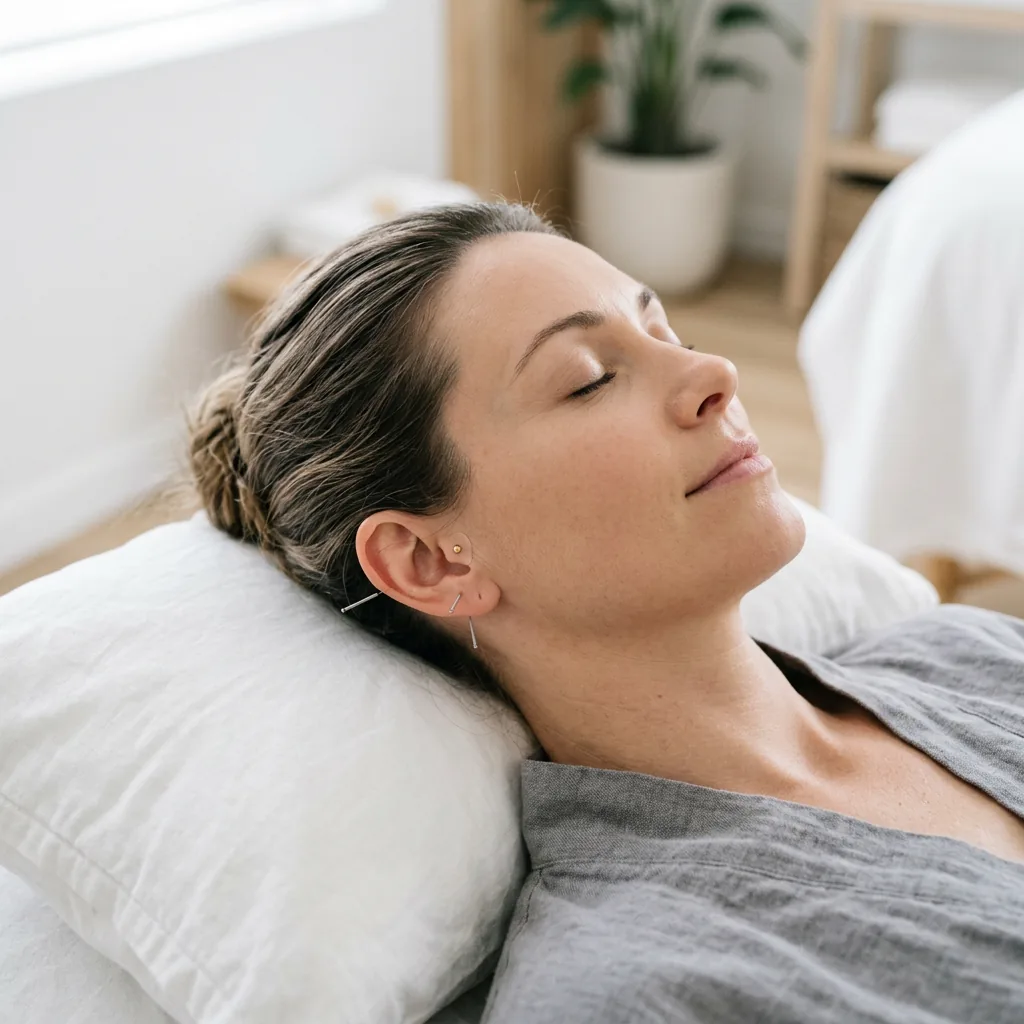
Acupuncture for chronic insomnia is a Traditional Chinese Medicine treatment that uses fine sterile needles at calming points to help the body downshift into sleep more easily. At Harmony Acupuncture & Wellness Spa in McLean, an initial session is 60 minutes for $150, follow-ups run 30 minutes for $100, and a 5 session package costs $400 — about $80 per visit. We are open 7 days, 9 AM to 9 PM, on Chain Bridge Rd. Research suggests acupuncture may improve sleep quality for some people, though the evidence is still developing and it is not a treatment for sleep apnea.
- Initial visit
- $150 · 60 minutes
- Follow-up
- $100 · 30 minutes
- Evening hours
- Open until 9 PM · 7 days
- Address
- 1481 Chain Bridge Rd, Ste 300
— 01
Why You Can't Sleep (TCM Perspective)
Insomnia is rarely one problem. Some people cannot fall asleep — the mind keeps drafting emails long after the lights go off. Others fall asleep instantly and snap awake at 3 AM. Still others technically log seven hours and wake up exhausted anyway.
Traditional Chinese Medicine takes those differences seriously. In the TCM framework, sleep depends on the shen — loosely, the mind-spirit — settling into the body at night. A day of pressure and screens is said to constrain liver qi and stir internal heat, leaving the shen unanchored: racing thoughts at bedtime, vivid dreams, that wired-tired wakefulness in the small hours. These are traditional descriptions rather than laboratory diagnoses, but they map remarkably well onto patterns any sleep-deprived person recognizes — and they guide exactly where the needles go.
Modern sleep science tells a parallel story: elevated evening cortisol, late caffeine (a 2 PM latte is still half-active at 8 PM), alcohol that fragments the second half of the night, and a Northern Virginia schedule — the 5:45 AM alarm for the Silver Line, calls that run past 9 PM — that leaves no runway between full throttle and pillow.
Both lenses agree on the core issue: a nervous system stuck in high gear. That is the target of acupuncture for insomnia, and it is why treatment often eases daytime stress at the same time — the two share wiring. If anxiety is the louder half of your problem, start with our acupuncture for anxiety and stress page.
— 02
How Acupuncture Eases Chronic Insomnia
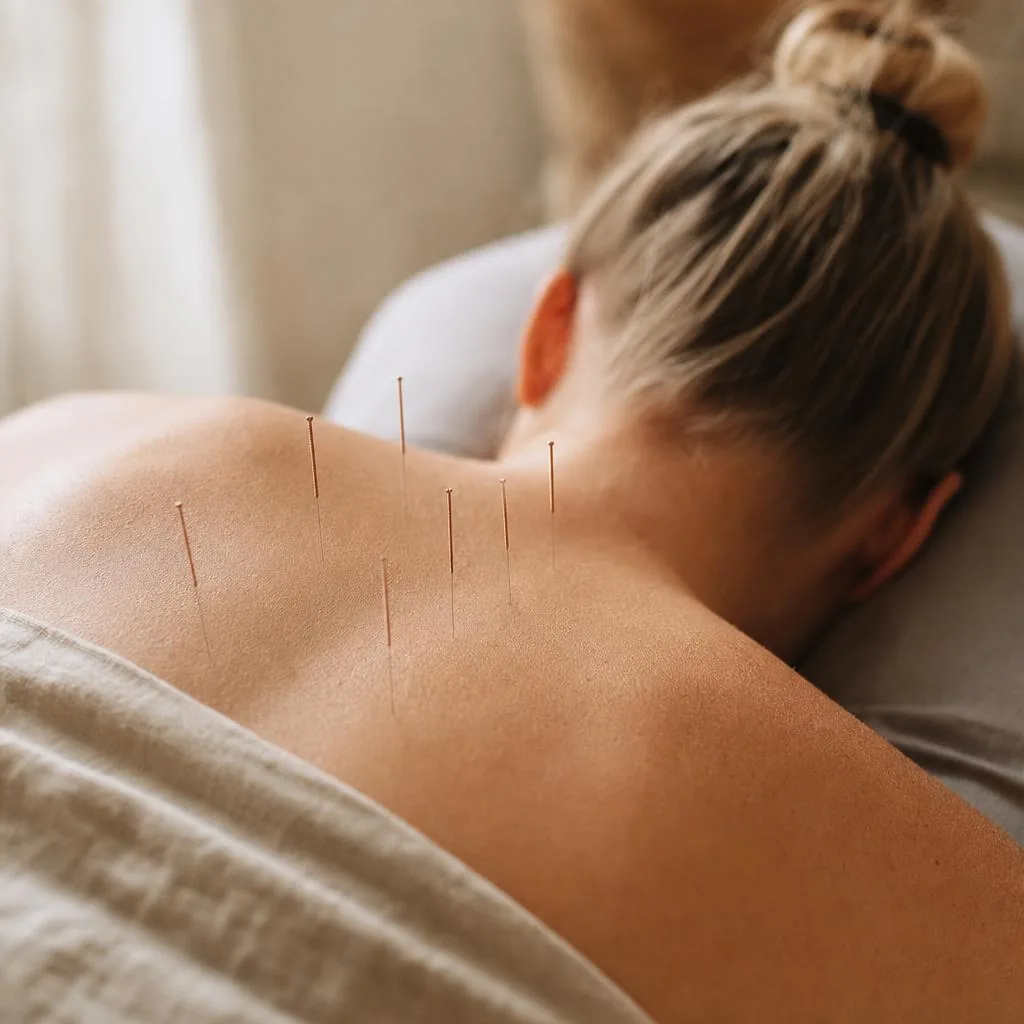
A session for sleep looks much like one for stress — because physiologically, the two overlap. A licensed acupuncturist places fine single-use needles at points on the ears, wrists, lower legs, and head that are traditionally used to calm the shen and, in modern terms, may nudge the autonomic nervous system out of fight-or-flight.
Proposed mechanisms are plausible but not proven. Needling may influence neurotransmitters involved in sleep regulation, including serotonin, a biochemical precursor to melatonin. Small studies have reported increased nighttime melatonin secretion and improved sleep measures after a course of acupuncture; others show heart-rate-variability changes consistent with deeper relaxation. The National Center for Complementary and Integrative Health, which reviews complementary approaches to sleep disorders, characterizes the evidence for acupuncture and insomnia as limited and mixed — some encouraging trials, most of them small.
Here is what we can add from the treatment room, after 15+ years of practice and 5,000+ clients: the most common report following a first session is not that insomnia vanished. It is simpler — that night, I slept hard. Whether that deepening holds and stretches across the week is what a treatment series works toward.
The effect tends to be cumulative. One good night becomes two. The 3 AM wake-up still happens, but you drop back under instead of watching the ceiling. That trajectory — gradual, real, unforced — is the honest version of what acupuncture may offer for sleep.
— 03
Sleep Habits & Lifestyle Support

In classical practice, acupuncture for sleep was rarely delivered alone. Comforting add-on therapies — gentle cupping across the upper back, gua sha along a tight neck, warm basalt stones resting at tense shoulders — were chosen to match each person's pattern: the restless mind, the light sleeper, the 3 AM waker. We continue that tradition with gua sha & hot stone add-ons folded into the same session; your practitioner suggests them only where your pattern calls for it — call or text 240-715-5939 with questions. Always tell us what medications you take so your whole care plan stays coordinated.
Then there are the unglamorous levers, which we will actually walk through with you rather than hand you a printout:
- Set a caffeine curfew around 12 PM — its long half-life means an afternoon coffee is still working at bedtime.
- Dim screens an hour before bed, or at minimum move the phone off the nightstand.
- Keep your wake time fixed, even after a bad night. Sleeping in teaches the body nothing.
- Shift alcohol earlier and lighter; it sedates first, then fragments the night's second half.
- Cool, dark room — 65 to 68 degrees is a reasonable target.
A word on naps and weekend catch-up sleep, because everyone asks: a short nap before 2 PM is usually harmless, but long or late naps drain the sleep pressure your night depends on. And sleeping until 10 AM on Saturday feels like repayment while quietly shifting your body clock two time zones west — Monday's 5:45 AM alarm collects the debt with interest.
None of this is revolutionary on its own. The combination — needles to downshift the nervous system, warming add-ons where they fit, and consistent sleep mechanics — is what many patients find finally moves things after years of white-knuckling it.
— 04
Chronic Insomnia Treatment Plan
Sleep responds best to a short, structured series rather than scattered one-off visits. A typical plan looks like this — adjusted, always, to how your nights actually change:
| Stage | Cadence | What we watch |
|---|---|---|
| Weeks 1–2 | 1–2 sessions per week | Sleep depth the night after treatment; time to fall asleep |
| Weeks 3–6 | Weekly | Whether gains stretch across the whole week; fewer 3 AM wake-ups |
| Maintenance | Every 2–4 weeks | Holding steady through travel, deadlines, and seasonal shifts |
A simple sleep log — bedtime, wake-ups, how you felt at 10 AM — makes the trend visible and keeps us honest. If six sessions in your nights have not budged, we will say so and talk about next steps, including a referral conversation with your physician.
Some patients pair occasional bodywork with their series — tui na meridian massage helps when physical tension is part of what keeps you surfaced at night — though the needles remain the core of sleep-focused care.
On cost: the 5 session package brings follow-ups to about $80 per visit, and we accept major insurances like UnitedHealthcare and Aetna — text your policy info to 240-715-5939 for a free benefits check. First-timers can preview the whole process in our new patient guide.
— 05
What Research Shows — and Its Limits
The candid summary: acupuncture for insomnia has encouraging but limited evidence. Reviews of randomized trials suggest possible improvements in sleep quality and time to fall asleep, yet many studies are small and hard to blind. NCCIH's guidance on sleep disorders and complementary approaches lands in the same place — worth considering for some people, not a proven fix. For chronic insomnia, cognitive behavioral therapy for insomnia (CBT-I) remains the best-studied first-line treatment; acupuncture can sit comfortably alongside it, not in front of it.
What acupuncture can't do
- It cannot treat obstructive sleep apnea — a mechanical airway problem that needs medical evaluation.
- It is not a replacement for CBT-I or prescribed sleep medication; never stop a prescription without your doctor.
- It cannot override a schedule that simply does not allow enough hours for sleep.
See a doctor promptly if
- You snore loudly, gasp during sleep, or a partner has watched you stop breathing — ask about a sleep study.
- You are dozing off while driving. That is urgent, not a wellness matter.
- Sleeplessness comes with persistent low mood or hopelessness — mental health care should lead. In crisis, call or text 988.
- Restless, crawling legs keep you awake nightly — restless legs syndrome has specific medical treatments.
Inside those boundaries, many patients find a needle session the most reliable off-switch they have — drug-free, low risk in licensed hands, and pleasant enough that keeping the habit is easy.
— Pricing
| Acupuncture | Price |
|---|---|
| Initial session · 60 minutes | $150 |
| Follow-up session · 30 minutes | $100 |
| Package · 5 sessions (30 minutes each)($80 per visit) | $400 |
Insurance patients: sessions are billed through your plan — text us your policy info for a free benefits check.
Parking & arrival
Free parking — easy in, easy out on Chain Bridge Rd
Open every day 9 AM – 9 PM — lunch-break, after-work, and weekend visits all fit.
- Park free directly on-site at 1481 Chain Bridge Rd, Ste 300 — no garages, no meters.
- Look for the red-brick building; we're in Ste 300 with signage at the entrance.
- Arrive 10 minutes early for your first visit to settle in — WiFi and a snack bar are waiting.
— Questions
Asked & answered.
How quickly can acupuncture improve my sleep?
Can acupuncture help insomnia I've had for years?
Will I need to keep coming forever to sleep well?
Is acupuncture safe alongside sleep medication?
What time of day should I book a sleep session?
— Research & references
NCCIH — Sleep Disorders and Complementary Health Approaches
Reviews complementary approaches for sleep; evidence for acupuncture is limited and mixed, with some small positive trials.
NCCIH — Stress and Complementary Approaches
Notes that some mind and body practices may help with stress, a frequent driver of disrupted sleep.
Mayo Clinic — Relaxation Techniques
Describes how relaxation practices may ease symptoms that interfere with sleep, such as muscle tension and a racing heart.
Citations are summarized — please consult the original sources. This page is general health education, not medical advice for your specific case; results vary and acupuncture works best alongside, not instead of, care from your physician.
— Keep exploring
Condition
Acupuncture for Anxiety & Stress
The daytime half of the sleep problem — calm it and nights follow.
Service
Gua Sha & Hot Stone
Warming add-ons that pair naturally with sleep-focused sessions.
Location
Acupuncture in McLean, VA
Our home base on Chain Bridge Rd — free parking, open to 9 PM.
Guide
Stress, Sleep & Acupuncture
A longer read on the stress-sleep loop and how treatment fits in.