— Conditions · Plantar Fasciitis & Heel Pain
Acupuncture for Plantar Fasciitis & Morning Heel Pain
The first step out of bed, and the heel answers back. Acupuncture can play a supporting role for plantar fasciitis, but the evidence is limited — stretching, footwear and physician-guided care come first. Here is where needling may fit, and where it does not.
Quick answer
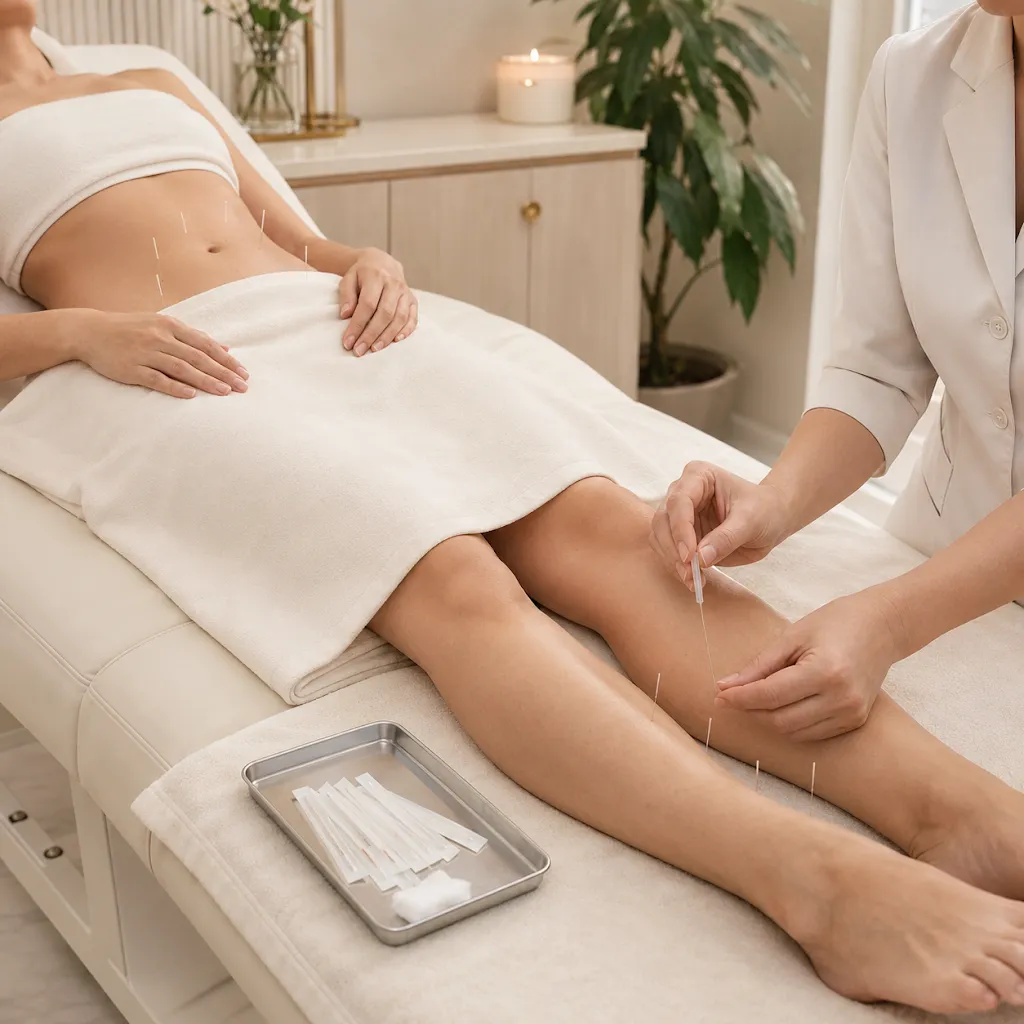
Acupuncture for plantar fasciitis is a supportive treatment in which thin sterile needles are placed at points around the heel, ankle and calf to help ease heel pain, offered at Harmony as a first visit of 60 minutes for $150. Follow-ups are 30 minutes for $100, and a package of 5 sessions is $400 — $80 per visit — at 1481 Chain Bridge Rd, Ste 300 in McLean, VA, open 7 days, 9 AM to 9 PM. The evidence is limited: a few small trials suggest short-term pain relief over 4 to 8 weeks, so we treat acupuncture as an add-on to stretching, supportive shoes and physician-guided care, never a replacement for them.
- Initial visit
- $150 · 60 minutes
- Follow-up
- $100 · 30 minutes
- Package
- 5 sessions · $400
- Evidence
- Limited · short-term
— 01
What Plantar Fasciitis Is — and why mornings hurt
Plantar fasciitis is irritation of the plantar fascia, the thick band of tissue under the foot that runs from the heel bone toward the toes and supports the arch. Its signature is pain under the heel with the first few steps after getting out of bed or after a long rest, easing as you walk, then building again after hours on your feet.
That morning pattern is so typical that the American Academy of Orthopaedic Surgeons (AAOS) describes it almost exactly that way. A common explanation is that the fascia and calf tighten overnight while the foot rests relaxed and pointed, so the first loaded step stretches irritated tissue before it has warmed up. The pain may be sharp or a dull ache, and some people feel a burning along the arch.
Who tends to get it
The risk factors listed by AAOS and by MedlinePlus, the National Library of Medicine's consumer health service, read like a census of Northern Virginia weekends:
- A jump in activity — a new running plan on the Washington & Old Dominion (W&OD) Trail, a hiking trip, a first season of pickleball
- Long hours standing on hard floors — teaching, retail, nursing, a new standing desk
- Tight calves and Achilles tendon, which pull on the heel from behind
- Foot shape — flat feet or high arches
- Shoes with soft soles or little arch support
- Weight gain, including the sudden kind
- Age — AAOS notes it is most common between 40 and 60
Is it a heel spur?
Sometimes an X-ray shows a small bony spur on the heel, and the spur takes the blame. AAOS points out that most people with heel spurs have no heel pain at all, and that plantar fasciitis can be treated without removing the spur. A spur on an X-ray is common; it is rarely the main story.
— 02
Start With the Basics: stretching, shoes, a plan
The first-line care for plantar fasciitis is unglamorous and works for most people: stretching the calf and the sole, supportive shoes, easing off the activity that flared it, ice, and over-the-counter pain relief if your doctor agrees. AAOS reports that more than 90% of patients improve within 10 months of starting simple treatments like these.
Ten months is a long time to live with a sore heel, which is exactly why people start looking at other options, acupuncture included. Before adding anything, check that the basics are genuinely in place — no needle can compensate for shoes that collapse under the arch.
| Approach | What it involves | Who usually guides it |
|---|---|---|
| Stretching | Calf stretches, plus stretches that draw the toes back toward the shin to lengthen the sole | A physician or physical therapist, then you at home |
| Footwear and inserts | Cushioned shoes with arch support; over-the-counter or custom orthotics; heel cups | You, a podiatrist or a physical therapist |
| Activity changes, ice and pain relief | Swapping some running or standing for lower-impact activity; ice on the sore area; anti-inflammatory medicine if appropriate | You, with your physician's advice on medicine |
| Night splints and walking boots | A splint that holds the foot flexed overnight; a short spell in a boot cast for stubborn cases | A physician or podiatrist |
| Injections and shockwave therapy | Cortisone, platelet-rich plasma or other injections; extracorporeal shockwave therapy for persistent pain | A physician only |
| Surgery | Generally reserved for people who have not improved after 12 months of thorough nonsurgical care | An orthopaedic or foot surgeon |
| Acupuncture | An optional add-on for pain, with limited, short-term evidence | A licensed practitioner, alongside the care above |
See a physician or podiatrist early rather than late. A diagnosis confirms the problem really is the plantar fascia, and they can tailor the stretching, footwear and splint plan to your foot. Acupuncture, if you add it, slots in beside that plan rather than ahead of it.
A simple morning routine
Many people with sore heels use a routine like this one — check it with your physician or physical therapist first:
- Before you stand, sit on the edge of the bed and draw your toes back toward your shin, or loop a towel around the ball of the foot and pull gently.
- Take the first steps in shoes or supportive slippers rather than barefoot on a hard floor.
- Stretch the calf against a wall once you are up and moving.
- Repeat after long sits — the drive home on the Dulles Toll Road, a long meeting, a film.
— 03
How Acupuncture for Plantar Fasciitis may help
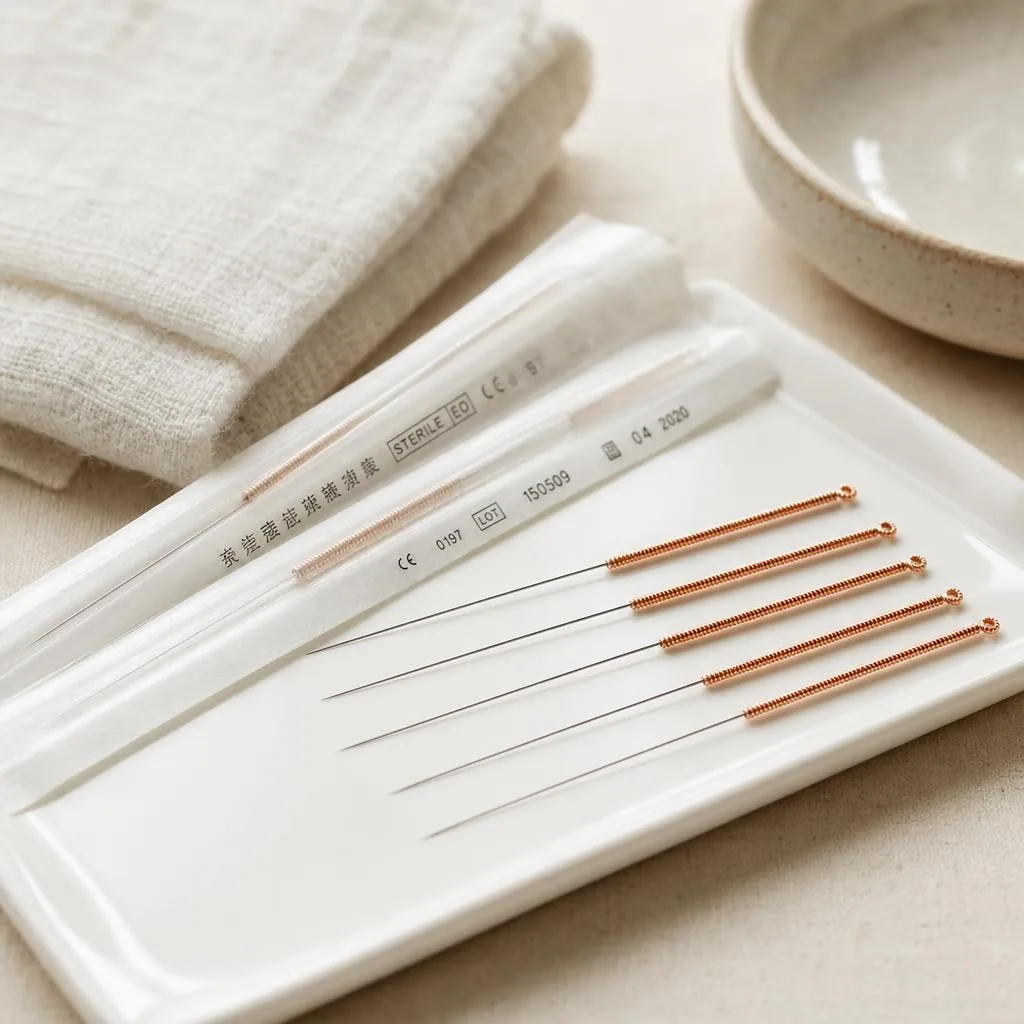
Acupuncture for plantar fasciitis aims at pain and at the tension around the heel rather than at the fascia's structure. Needles may go near the heel and inner ankle, into tight calf muscles that pull on the heel from above, and at points far from the foot — on the leg or even the wrist — depending on the practitioner's assessment and your comfort.
The Traditional Chinese Medicine view
Traditional Chinese Medicine (TCM) maps the heel onto the Kidney and Bladder channels, which wrap around the inner and outer ankle, and traditionally links heel pain that worsens with fatigue and age to a weakened Kidney system — a TCM concept, not a statement about your actual kidneys. Points around the ankle and along the calf are classic choices. Some trials have also tested points far from the foot: one compared two hand and wrist points, PC7 (Pericardium 7, at the wrist crease) and LI4 (Large Intestine 4, on the hand), and found PC7 eased heel pain more.
The physiological view
Needling stimulates nerves in skin and muscle, and research suggests this may change how pain is processed, including through the body's own pain-modulating chemicals. Tight calves, a recognised risk factor, can also carry tender, taut bands that a fine needle reaches directly — an idea acupuncture shares with dry needling, and our dry needling vs acupuncture comparison explains how the two differ. What needling does not do is remodel the fascia, change your arch, or replace the stretching that lengthens the calf.
What a session is like
Depending on the points chosen, you may lie face-down for calf and heel points or on your back for points at the ankle and shin, with single-use sterile needles placed in a private room. The sole is more sensitive than the calf, so points there can feel sharper; the FAQ below covers how to avoid them if you prefer. Loose trousers that roll up past the knee make access easy.
Safety first
If you have diabetes, peripheral neuropathy, poor circulation in the feet, or broken or infected skin on the foot, have a physician or podiatrist examine the foot before anyone needles it, and mention blood thinners or a bleeding disorder when you book. Relatively few complications from acupuncture have been reported, according to the National Center for Complementary and Integrative Health (NCCIH), which also notes that the Food and Drug Administration (FDA) requires acupuncture needles to be sterile and labeled for single use.
— 04
What Research Shows — and its limits
The research on acupuncture for plantar fasciitis is small and uneven. A 2017 systematic review in the Singapore Medical Journal found only 4 randomized trials. All 4 reported less heel pain after 4 to 8 weeks of acupuncture, with no further gain after that point, and the reviewer concluded there was too little evidence to judge longer-term effects.
The details temper the headline. Three of those trials compared acupuncture with standard care, so patients knew which treatment they were getting and expectation could shape the results. Two used electro-acupuncture, a mild current passed through the needles, so their findings do not map neatly onto manual needling. The one trial that followed patients for up to 6 months found the pain relief was no greater than standard therapy over that longer stretch, and the studies differed too much to pool.
An earlier 2012 review in Acupuncture in Medicine included 5 randomized and 3 non-randomized studies and judged the better ones encouraging; in one, adding acupuncture to standard care that included anti-inflammatory medicine improved pain and function. A Cochrane review intended to pool this evidence was planned and then withdrawn in 2019, so there is no Cochrane verdict in either direction.
Reading that honestly
The fair conclusion: acupuncture may reduce plantar fasciitis pain in the short term for some people, the trials are too small to say how large or lasting that effect is, and across acupuncture research the advantage over sham needling is generally smaller than the advantage over no treatment, which suggests expectation and the ritual of care contribute. Nothing in the evidence suggests acupuncture changes the fascia itself, and nothing suggests it should replace stretching, footwear or physician-led treatment.
So the advice is plain. If your heel has hurt for a few weeks, start with the basics above and see a physician. If it has lingered for months despite doing them properly, a defined trial of acupuncture alongside that care is reasonable to discuss with your doctor — judged by your own first steps in the morning, not by our say-so.
— 05
When Heel Pain Needs a Doctor — and how to book
Heel pain that does not fit the plantar fasciitis pattern needs a medical examination before acupuncture or massage. See a physician or podiatrist promptly, or go to urgent care if it is severe, when any of these apply:
- Pain that began after a fall or after landing hard on the heel — a fracture needs ruling out
- Sudden, severe pain, or a foot you cannot put weight on even after resting
- Redness, warmth or swelling of the heel, especially with fever
- Numbness, tingling or burning that spreads into the foot or toes, which can point to a nerve problem
- Pain at night or at rest that does not follow the usual first-step pattern
- Diabetes together with any foot numbness, colour change, sore or wound
- Heel pain that is no better after 2 to 3 weeks of home care, or is getting worse
Pairing acupuncture with calf work
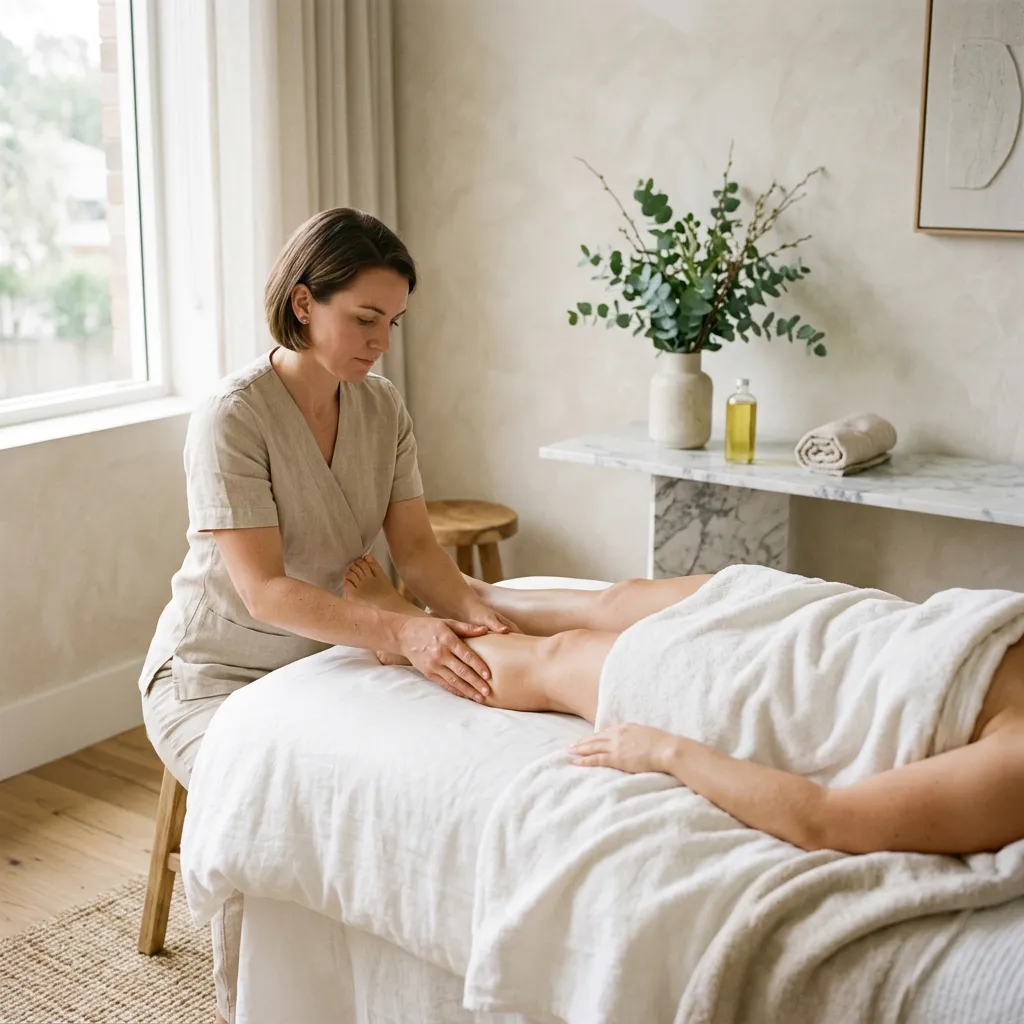
Because tight calves load the heel, hands-on work there is a natural companion to needling. A 60 minute tui na massage can spend its time on the calves and the backs of the legs for $100, or $80 at the member rate that comes with buying a package of 5 or more massage sessions — no fee, no signup. Massage is self-pay; insurance applies only to acupuncture.
Cost, insurance and booking
Acupuncture costs the same for any condition: the first visit is 60 minutes for $150, follow-ups are 30 minutes for $100, and the 5 session package is $400 — $80 per visit, a sensible size for a defined trial. We accept UnitedHealthcare and Aetna for acupuncture; text your policy details to 240-715-5939 for a free benefits check, or read our insurance page. Medicare covers acupuncture only for chronic low back pain, so heel pain is not covered under that benefit.
We are at 1481 Chain Bridge Rd, Ste 300, with free parking at the door, open 9 AM to 9 PM every day. Directions and clinic details are on the page for plantar fasciitis care at our McLean clinic. If your knees ache as well as your heels, our acupuncture for knee pain page covers that side, and runners should also read about sports injury recovery. First time? The new patient guide covers what to expect.
— Pricing
| Acupuncture | Price |
|---|---|
| Initial session · 60 minutes | $150 |
| Follow-up session · 30 minutes | $100 |
| Package · 5 sessions (30 minutes each)($80 per visit) | $400 |
Insurance patients: sessions are billed through your plan — text us your policy info for a free benefits check.
Parking & arrival
Free parking — easy in, easy out on Chain Bridge Rd
Open every day 9 AM – 9 PM — lunch-break, after-work, and weekend visits all fit.
- Park free directly on-site at 1481 Chain Bridge Rd, Ste 300 — no garages, no meters.
- Look for the red-brick building; we're in Ste 300 with signage at the entrance.
- Arrive 10 minutes early for your first visit to settle in — WiFi and a snack bar are waiting.
— Questions
Asked & answered.
How many acupuncture sessions does plantar fasciitis usually need?
Nobody can honestly promise a number. In the trials that exist, benefit showed up over 4 to 8 weeks of treatment, with little extra after that. A sensible approach is a defined trial — the 5 session package ($400, or $80 per visit) is a natural size — measured by your first-step pain each morning. If the heel has not changed by the end, stop and revisit the plan with your physician.
Will acupuncture get rid of my heel spur?
No. Needles do not dissolve bone, and they do not need to: AAOS notes that most people with heel spurs have no heel pain, and that plantar fasciitis can be treated without removing the spur. Where acupuncture may help is the pain and calf tension around the heel, while stretching and supportive footwear do the longer-term work.
Should I try acupuncture before a cortisone shot or shockwave therapy?
That sequencing is a conversation for your physician or podiatrist, who knows your foot and history. Injections and shockwave therapy are physician-delivered options for persistent pain; acupuncture is a needle-only option with limited evidence and relatively few reported complications. Some people try acupuncture first, others between treatments — either way, tell each provider what the others are doing.
Can I keep running with plantar fasciitis?
Often in a reduced form, but take that answer from your physician or physical therapist rather than from your heel at mile three. Running long distances, downhill or on uneven ground is a recognised risk factor, so many runners swap some miles for cycling or swimming while the fascia settles. Our sports injury page covers the return-to-training side.
Do the needles go into the bottom of my foot?
Not necessarily. Many points used for heel pain sit around the ankle and along the calf, and some practitioners also use points on the hand or wrist. The sole is sensitive, so needles there can feel sharper than elsewhere. If you would prefer to avoid them, say so before the session starts and your practitioner can work from the ankle and leg instead.
Is acupuncture safe for my feet if I have diabetes?
Have a physician or podiatrist examine your feet first. Diabetes can reduce sensation and slow healing in the feet, which changes the safety picture for any needle, pedicure or firm pressure there. Tell us about diabetes, neuropathy or circulation problems when you book; with medical clearance, treatment can focus on points away from the foot itself.
— Research & references
AAOS OrthoInfo — Plantar Fasciitis and Bone Spurs
Describes the classic first-step heel pain and reports that more than 90% of patients improve within 10 months of simple nonsurgical treatment.
MedlinePlus — Heel Pain
Lists causes of heel pain and when to contact a provider, including sudden severe pain or pain no better after 2 to 3 weeks of home care.
Singapore Medical Journal — How effective is acupuncture for reducing pain due to plantar fasciitis? (2017)
A review of 4 small trials concluding acupuncture may reduce plantar fasciitis pain in the short term, with insufficient evidence on longer-term effects.
NCCIH — Acupuncture: Effectiveness and Safety
Notes that relatively few complications have been reported, that the FDA requires sterile single-use needles, and that benefits tend to be smaller against sham.
Citations are summarized — please consult the original sources. This page is general health education, not medical advice for your specific case; results vary and acupuncture works best alongside, not instead of, care from your physician.
— Keep exploring
Condition
Acupuncture for Knee Pain
Chronic knee pain and osteoarthritis — what the 2026 guideline says.
Condition
Sports Injuries & Recovery
For runners whose heel pain arrived with a new training block.
Service
Tui Na Massage
Hands-on calf work for the muscles that pull on a sore heel.
Location
Acupuncture in McLean, VA
Chain Bridge Rd clinic — free parking, open 7 days, 9 AM to 9 PM.