— Harmony Journal · Safety
Acupuncture Side Effects and Safety — what's common, what's rare.
Most of what can go wrong with acupuncture is small and local. The rare serious problems are well documented too — and much of that record traces back to a few avoidable causes.
Quick answer
Acupuncture side effects are the reactions that can follow needling — most often minor bleeding or bruising, which a National Health Service (NHS) hospital leaflet puts at about 3 in 100 treatments, and pain during treatment at about 1 in 100. Serious harm, such as infection or a punctured lung, is rare: under 1 per 10,000 treatments. At Harmony Acupuncture & Wellness Spa in McLean, licensed practitioners use sterile, single-use needles; an initial session is 60 minutes and $150, and follow-ups are 30 minutes and $100. Tell your practitioner first about pregnancy, blood thinners or a pacemaker.
- Most common
- Minor bleeding or bruising
- Serious events
- Under 1 per 10,000 treatments
- Needles
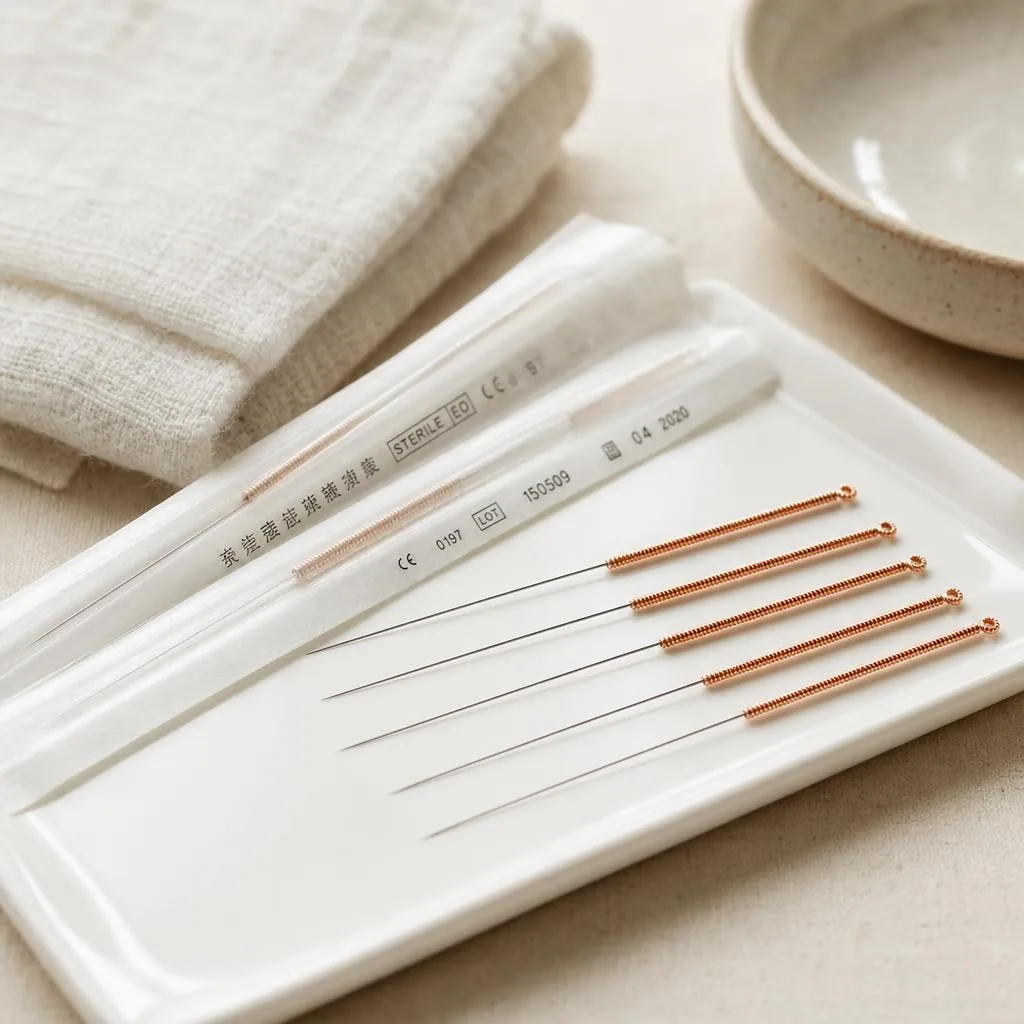
- Sterile · single-use · FDA-regulated
- Initial visit
- $150 · 60 minutes
— 01
Most acupuncture side effects are small, local and well counted.

Acupuncture side effects have been counted more carefully than most people assume. Instead of collecting alarming stories after the fact, several large prospective surveys asked practitioners or patients to log every reaction as it happened, across tens of thousands of treatments. Their findings agree on the shape of the risk: small reactions at the needle site are fairly frequent, and serious ones are rare.
The York acupuncture safety study, published in the BMJ (British Medical Journal) in 2001, asked traditional acupuncturists to record 34,407 treatments. They reported no serious adverse events and 43 minor ones — 1.3 per 1,000 treatments — the most common being severe nausea and fainting. Alongside those, practitioners logged milder passing reactions in 15% of treatments, and the 2 most frequent were not complaints at all: patients felt relaxed (11.9%) or energized (6.6%).
A companion survey published alongside it covered 31,822 consultations with doctors and physiotherapists who practice acupuncture. Again there were no serious events. The most common minor ones were bleeding (310 per 10,000 consultations) and pain from needling (110 per 10,000), followed by a temporary aggravation of symptoms (96 per 10,000).
The biggest dataset comes from a 2009 study in the journal Forschende Komplementärmedizin, which followed 229,230 patients treated by physicians, averaging about 10 treatments each. Over the whole course, 8.6% reported at least one adverse effect and 2.2% needed treatment for one. Bleeding or hematoma — a small pocket of blood under the skin — made up most of them, at 6.1% of patients. The study recorded 2 cases of pneumothorax, a punctured lung, and its longest-lasting problem was a nerve injury that persisted for 180 days.
Per treatment or per patient?
Notice the different yardsticks. A rate per patient across 10 sessions will always look larger than a rate per treatment, because every session is another chance for a bruise. Neither number is wrong; they answer different questions. For a first visit, the per-treatment figures are the relevant ones.
— 02
Reaction by reaction: how common, and what to do.
The table below gathers the reactions people ask about most, with frequencies taken from published sources rather than from our own impressions. Those sources used different methods — some count per treatment, some per patient over a whole course — so read the figures as orders of magnitude, not as precise odds for your next visit.
| Reaction | How common (published figures) | What to do |
|---|---|---|
| Minor bleeding or a small bruise at a needle site | About 3 in 100 treatments (NHS leaflet); bleeding or hematoma in 6.1% of patients over a full course (2009 study) | Light pressure with clean cotton; tell your practitioner beforehand if you take blood thinners or bruise easily |
| Pain during or after needling | About 1 in 100 treatments (NHS leaflet); 110 per 10,000 consultations (2001 survey) | Say so straight away — a needle can be adjusted or removed |
| Feeling woozy or light-headed | Up to 9 in 100 patients during or after a first treatment; fainting is very rare (NHS leaflet) | Eat a light meal beforehand, mention any history of fainting, and sit up slowly |
| Drowsiness afterward | A small number of patients (NHS leaflet) | Do not drive until it has fully passed |
| Existing symptoms temporarily worse | Under 3 in 100 patients (NHS leaflet); 2.8% of treatments (York study) | Mention it at your next visit; see a physician if it is severe or keeps building |
| Infection at a needle site | Rare; reported cases have been linked to non-sterile needles and improper technique | Spreading redness, warmth, discharge or fever: call your doctor |
| Punctured lung (pneumothorax) | Rare — 2 cases among 229,230 patients (2009 study) | Sharp chest or shoulder pain that worsens on a deep breath, or shortness of breath: urgent care, or 911 if severe |
| Nerve injury | Rare — the longest-lasting event in the 2009 study, at 180 days | Burning, numbness or weakness that persists: see a physician |
Put the rare rows in proportion. A 2004 review in the journal Acupuncture in Medicine combined 12 prospective surveys covering more than a million treatments and estimated the risk of a serious adverse event at 0.05 per 10,000 treatments. The same review also gathered the case reports in the medical literature: punctured lungs and central nervous system injuries were the most common kinds of trauma, hepatitis B the most common infection, and a small number of deaths were reported. It concluded that some of those events, specifically trauma and some infections, were likely avoidable.
That conclusion is the practical lesson of the whole safety literature. Much of the serious harm on record is the kind that careful technique and sterile equipment exist to prevent — which is why the next section is about needles and licenses rather than about luck.
— 03
Sterile needles and a license are not small print.
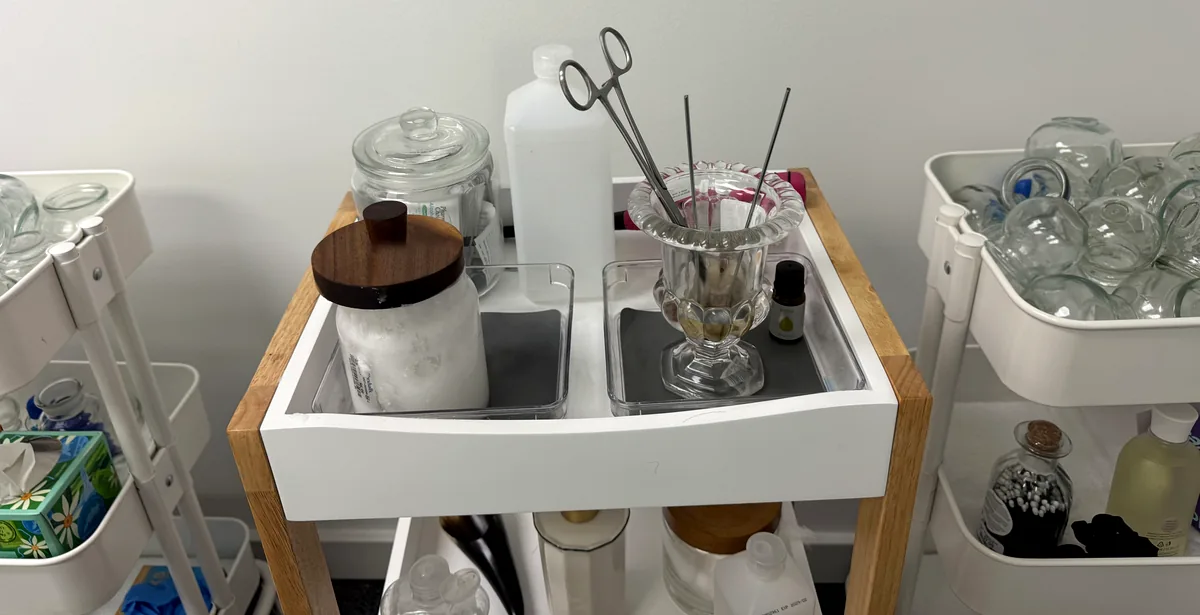
Sterile, single-use needles and proper training are the 2 variables the safety literature keeps returning to. The National Center for Complementary and Integrative Health (NCCIH) puts it plainly: relatively few complications from acupuncture have been reported, but complications have resulted from non-sterile needles and improper delivery of treatment, including infections, punctured organs and injury to the central nervous system.
What the FDA requires of a needle
The U.S. Food and Drug Administration (FDA) regulates acupuncture needles as medical devices. Under federal regulation 21 CFR 880.5580 they are Class II devices with special controls covering sterility, biocompatible materials, labeling for single use only, and the rules for prescription devices. NCCIH summarizes the practical result: needles must be sterile and labeled for single use only.
Single use matters because of history. In the 2004 review, infection accounted for hundreds of case reports, and more than 60% of them were hepatitis B, a bloodborne virus. At Harmony, every needle is sterile and single-use and is discarded after your session.
What a Virginia license means
Virginia makes it unlawful to practice acupuncture, or to present yourself as an acupuncturist, without a license issued by the Board of Medicine (Code of Virginia § 54.1-2956.9). To renew in active status, the Board requires current certification from the National Certification Commission for Acupuncture and Oriental Medicine (NCCAOM). Licenses are public: the Department of Health Professions' free License Lookup lists licensed acupuncturists and can be searched by name. Ask for your practitioner's name and look them up — at any clinic, ours included.
The same questions apply to dry needling, which uses the same kind of filiform needle; our dry needling vs. acupuncture comparison covers how the training and licensing behind the two differ.
— 04
Tell your practitioner first if any of these apply.

Several conditions do not rule acupuncture out but do change how it should be done, and a practitioner can only adjust for what they know about. A patient leaflet from The Royal Marsden, an NHS hospital in London, reproduced from the British Medical Acupuncture Society, asks patients to mention each of the following before treatment:
- Pregnancy, or any chance you are pregnant — see how acupuncture in pregnancy is approached here.
- Blood thinners or a bleeding disorder. The leaflet's wording is anticoagulants "or any other medication" — so bring the full list, not only the ones that seem relevant.
- A pacemaker or any other electrical implant. It matters for any technique that involves electrical stimulation; mention it regardless.
- A weakened immune system, damaged heart valves, or any other particular risk of infection.
- HIV or another blood-borne infection.
- A history of fits, faints or "funny turns" — the reason behind the light-headedness row above.
- A metal allergy.
Our new patient guide asks you to bring a list of current medications and supplements to your first visit, and the 60 minute initial session begins with a health history before any needle is placed. That conversation is the natural moment to raise anything on this list.
When acupuncture should wait
NCCIH's other caution matters as much as any needle: don't use acupuncture to postpone seeing a health care provider about a health problem. New or unexplained pain, a fever, a sudden change in a long-standing symptom, or anything that has never been diagnosed deserves a medical opinion first. Acupuncture can sit alongside that care; it should not stand in front of it.
— 05
If something feels wrong, how to report it.
Reporting a problem after acupuncture runs on two tracks: your health first, then the record. Most reactions need nothing more than a phone call, but a few need medical care straight away, and a smaller number deserve a formal report so that a regulator can look at the practitioner or the product involved.
- Get care first if you need it. MedlinePlus lists sharp chest or shoulder pain made worse by a deep breath or a cough, and shortness of breath, as symptoms of a collapsed lung. If those follow needling near the chest, shoulders or upper back, go to urgent care — or call 911 if breathing is hard. For spreading redness, warmth, discharge or fever at a needle site, call your doctor.
- Tell the clinic. Call or text us at 240-715-5939 with what happened and when — whether it is a bruise you want to ask about or something more.
- Tell your own doctor. Any reaction that needed treatment belongs in your medical record, along with when and where the acupuncture happened.
- Report a practitioner concern. The Virginia Department of Health Professions' Enforcement Division receives complaints about licensed health care practitioners, acupuncturists included; its phone line is 1-800-533-1560.
- Report a faulty needle. A package that arrives open or a needle that breaks is a device problem; the FDA's MedWatch program takes reports from the public online or at 1-888-463-6332.
Sensation is not injury
Part of what feels wrong during a first session is simply unfamiliar. A dull ache, heaviness or spreading warmth around a needle is a sensation many people report, and it is different from sharp or lasting pain. Our guide to whether acupuncture hurts covers what needling normally feels like, so you can tell the two apart — and if you are unsure, say so on the table rather than afterward.
— 06
Safety at Harmony, in plain terms.
Safety at Harmony Acupuncture & Wellness Spa rests on the same basics this article has described: licensed practitioners, sterile single-use needles discarded after each session, a health history before treatment, and an open line if anything feels off afterward. None of that removes risk entirely — no needle-based treatment can — but it addresses the causes the safety literature names most often.
An initial session is 60 minutes and $150, and that hour includes the conversation where the list above belongs. Follow-ups are 30 minutes at $100, and a package of 5 sessions is $400, or $80 per visit. For acupuncture we accept UnitedHealthcare and Aetna; coverage varies by plan, so text your policy info to 240-715-5939 for a free benefits check, or read the insurance guide first. The clinic is at 1481 Chain Bridge Rd, Ste 300, open 7 days from 9 AM to 9 PM with free parking at the door; the McLean acupuncture page has directions and services.
If you are weighing a course of care, our guide to how many acupuncture sessions people need covers cadence and reassessment, and the clinic FAQ answers the practical questions about first visits, payment and parking.
This article is general health education, not medical advice. It summarizes published safety data; it does not predict your individual risk. If you have symptoms that worry you after any treatment, contact a medical professional promptly.
— Questions
Asked & answered.
Is it normal to bruise after acupuncture?
Yes — minor bleeding and small bruises are among the most commonly reported reactions. The Royal Marsden's NHS leaflet puts minor bleeding or bruising at about 3 in 100 treatments, and a 2009 study of 229,230 patients found bleeding or hematoma in 6.1% over a full course. A small bruise at a needle site usually needs nothing. Tell your practitioner beforehand if you take blood thinners or bruise easily.
Why do I feel light-headed or sleepy after acupuncture?
Some people do, especially the first time. The NHS leaflet says up to 9 in 100 patients feel woozy during or after a first treatment, that fainting is very rare, and that a small number feel drowsy afterward — in which case it advises not driving until fully recovered. Eating a light meal beforehand and sitting up slowly may help; mention any past fainting.
Can an acupuncture needle puncture a lung?
It can, but it is rare. A punctured lung, or pneumothorax, is among the most commonly reported serious injuries in the case literature, and a 2009 study of 229,230 patients recorded 2 cases. The risk lies with needling over the chest wall and upper back, where depth matters. Sharp chest pain that worsens on breathing, or breathlessness, after a session needs urgent care.
Can I have acupuncture if I take blood thinners?
Possibly, but it is a conversation, not an automatic yes. The Royal Marsden leaflet asks patients to mention anticoagulants and bleeding disorders before treatment, because bleeding and bruising at needle sites become more likely. Bring your full medication list, ask the doctor who prescribed the blood thinner, and never stop or change it to make a treatment easier.
Are acupuncture needles ever reused?
They should not be. The FDA requires acupuncture needles to be sterile and labeled for single use only, and most infections reported in the case literature were hepatitis B, a bloodborne virus. At Harmony every needle is sterile and single-use and is discarded after your session. If you ever see a needle that did not come from a sealed package, ask about it.
How do I check that an acupuncturist is licensed in Virginia?
Use the Virginia Department of Health Professions' free online License Lookup, which lists licensed acupuncturists and their license status; you can search by name. Virginia makes practicing acupuncture without a Board of Medicine license unlawful, and renewing in active status requires current NCCAOM certification. Any reputable clinic will tell you the practitioner's name so you can check.
— Research & references
NCCIH — Acupuncture: Effectiveness and Safety
Relatively few complications have been reported; those on record have been linked to non-sterile needles and improper delivery, and the FDA requires sterile, single-use needles.
BMJ — The York Acupuncture Safety Study (MacPherson et al., 2001)
No serious adverse events were reported across 34,407 treatments, with minor events at about 1.3 per 1,000 treatments.
The Royal Marsden NHS Foundation Trust — Acupuncture (patient information)
Gives approximate frequencies for common reactions and lists what patients should tell an acupuncturist before treatment.
Virginia Board of Medicine — Licensed Acupuncturist
The Board licenses acupuncturists in Virginia and links to the public license lookup and the complaint process.
Citations are summarized — please consult the original sources. This page is general health education, not medical advice for your specific case; results vary and acupuncture works best alongside, not instead of, care from your physician.
— Keep exploring
Guide
Does Acupuncture Hurt?
What needling normally feels like, and how that differs from mild acupuncture side effects.
Guide
New Patients & First Visit
What happens in the 60 minute first session, and what to bring.
Compare
Dry Needling vs. Acupuncture
Same needles, different training — how the two professions differ.
Location
Acupuncture in McLean, VA
Chain Bridge Rd clinic — hours, parking, insurance and booking.