— Harmony Journal · Cupping
Cupping Marks — what the circles do and don't tell you.
Round, purple, oddly symmetrical — and the first thing anyone asks about after cupping. Here is what the marks physically are, what their color can and cannot tell you, and the few signs that mean something has gone wrong.
Quick answer
Cupping marks are round red-to-purple patches left when cup suction breaks tiny capillaries just under the skin, and Cleveland Clinic says they should fade within 1 to 2 weeks. At Harmony Acupuncture & Wellness Spa in McLean, cupping is a $20 add-on to any 60 minute massage — free for members, meaning anyone who has bought a package of 5 or more massage sessions, with no fee and no signup. A flat, painless mark is expected; blistering, burns or signs of infection are not. No good evidence shows that mark color reveals toxins or diagnoses illness.
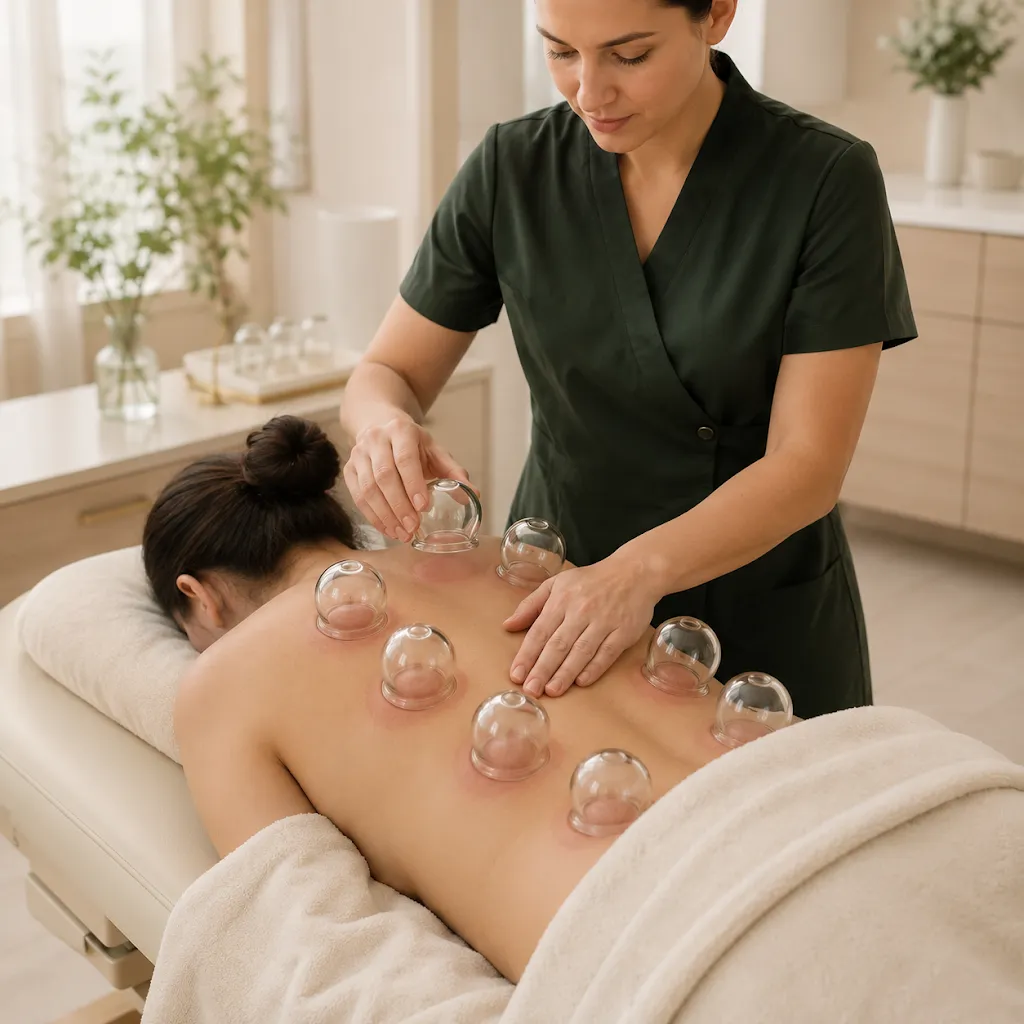
- What they are
- Broken capillaries under the skin
- Typical fade time
- About 1 to 2 weeks
- Add-on price
- $20 · free for members
- Not normal
- Blisters, burns, infection signs
— 01
What cupping marks actually are.

Cupping marks are the visible footprint of suction. When a cup is placed and the air inside is thinned, the skin and the tissue just beneath it are drawn up into the cup. The smallest blood vessels, the capillaries, stretch and dilate, and some of them break. The blood that escapes settles in the upper layers of skin, which is why each circle copies the exact shape of the cup.
Clinicians have two words for what you are looking at. Petechiae are tiny red dots from broken blood vessels, often visible as a fine speckle inside the ring. Ecchymosis is the term for a larger bruised area. A 2014 pilot study in the Journal of Acupuncture and Meridian Studies used exactly those two terms for the marks cupping leaves, measured the skin's color before and after, and followed the change for 72 hours.
Cleveland Clinic draws the distinction most people actually want: although the marks look like bruises, they are not true bruises that injure muscle fibers. A bruise from a fall comes from blunt force crushing tissue. A cupping mark comes from suction pulling blood toward the surface. That difference is why many people find the marks painless or only mildly tender, though Cleveland Clinic does list muscle soreness among the possible after-effects.
Why they can look alarming
The marks are distinctive enough to have been mistaken for injury. A 2025 forensic case report in the journal Cureus described about 25 circular purplish marks across a man's upper back that first raised suspicion of assault before cupping was identified as the cause. The National Center for Complementary and Integrative Health (NCCIH) gives the practical version: explain the marks to your health care providers so they are not mistaken for signs of physical abuse.
Dry cupping, not wet
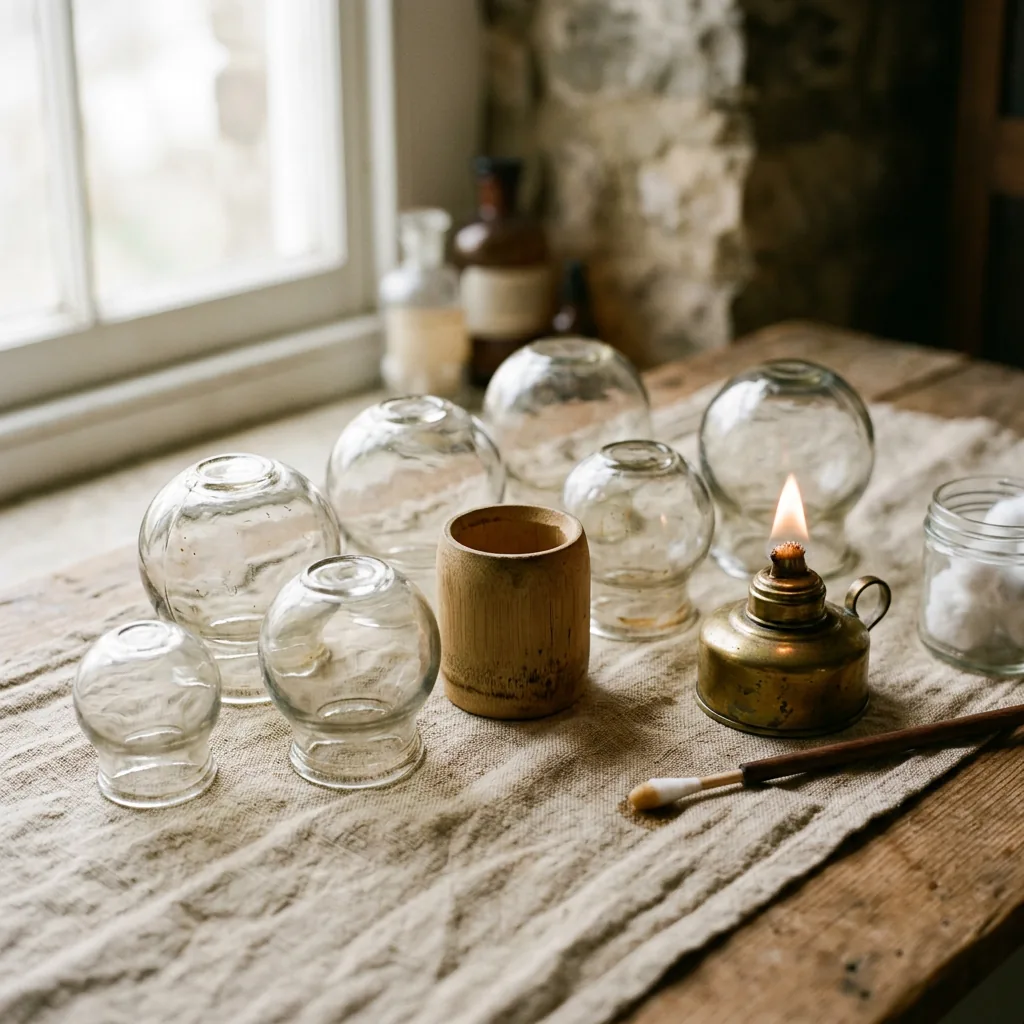
Everything in this article is about dry cupping, which NCCIH describes as cupping that does not pierce the skin. In wet cupping the skin is pierced and blood flows into the cup — a different practice with its own risks, including rare reports of anemia after repeated sessions. The cupping on our massage menu is the suction-only kind, using glass or silicone cups.
— 02
What the color can and can't tell you.
Mark color tracks blood, not toxins. A darker circle generally means more blood escaped the capillaries, a pale pink one means less, and no mark at all means very little did. As the body clears that blood, the mark changes color much the way an ordinary bruise does, moving from red or purple toward green and yellow before it disappears.
The chemistry behind that fade is well described. A 2017 review in Complementary Therapies in Clinical Practice traces the sequence: suction stretches the tissue and dilates the capillaries, some rupture, and immune cells called macrophages then break down the escaped red blood cells. The heme inside them is converted to biliverdin and bilirubin, the green and yellow pigments behind a fading bruise. The same review speculates about wider benefits from that clean-up process; those remain hypotheses.
The traditional reading
Traditional Chinese Medicine (TCM) reads the circles differently. Cupping has long doubled as a diagnostic method in that tradition, and darker marks are traditionally read as longer-held stagnation of qi and blood. We publish the traditional color readings for cupping marks on our cupping page, and we keep them labelled for what they are: a description of a tradition, not a diagnosis.
What the evidence does not support
What we have not found is good evidence that the color diagnoses anything. NCCIH and Cleveland Clinic both describe the marks as the physical result of suction; neither treats them as a readout of health. We know of no rigorous study showing that a dark mark reliably identifies toxins, poor circulation, a specific illness or stagnation, and the popular idea that cupping pulls toxins out through the skin has no physiological basis we can point to. The circle is blood that left a capillary.
Why two people mark so differently
Ordinary variables plausibly explain most of the gap between your marks and a friend's: how strong the suction was, how long the cups stayed on, whether they were held still or glided, your skin tone, and whether you take medication that affects clotting. MedlinePlus lists anticoagulants such as warfarin and heparin, antiplatelet medicines such as clopidogrel, aspirin, and steroids among the causes of bleeding into the skin — so a person taking one may mark more heavily for reasons unrelated to the tissue underneath.
Does a darker mark mean a better session?
Nothing we have read suggests it. NCCIH's overall verdict on cupping is modest — it may help reduce pain, but the evidence is not very strong — and no study we know of links mark intensity to benefit. Chasing darker marks mostly means breaking more capillaries, and at the extreme it invites the persistent discoloration and scarring NCCIH lists among cupping's documented harms.
— 03
How long cupping marks last, and how to plan around them.
Cupping marks usually fade within 1 to 2 weeks, according to Cleveland Clinic, and lighter marks tend to clear sooner because less blood escaped. Because the timeline depends on how much blood left the capillaries, the same factors that darken a mark also tend to lengthen it. The body clears the leaked blood on its own schedule, as it does with any bruise.
That 2 week window is the number to plan around. If your back, shoulders or neck will be on show — a wedding, a beach trip, a pool day, a formal event, a photo shoot, a medical appointment where you will undress — work backward from the date:
- More than 2 weeks out: cupping is a reasonable choice if you want it; most marks should be gone or faint by the day itself.
- Inside 2 weeks: mention the event when you book. Ask for lighter suction, or for cups only where clothing will cover them — or skip the add-on this time. A 60 minute massage stands on its own.
- A few days before: skip cupping. Even light suction can leave a visible ring for days, and nobody can promise a mark-free result.
- Afterward: if a doctor's or dermatologist's appointment comes up while the marks are visible, say where they came from so they are read correctly.
One add-on swap does not solve the problem: gua sha raises temporary marks of its own, by scraping rather than suction. If the goal is unmarked skin on a specific date, the honest answer is a plain massage.
Telling the people who will see them
NCCIH's one specific piece of advice about the marks extends naturally to anyone else who will see your back for a few days: a physical therapist, a personal trainer, a swim coach, a nurse at a routine visit. A one-line explanation — these are from cupping, they fade on their own — heads off an awkward conversation and keeps anyone from mistaking a treatment for an injury.
— 04
Aftercare: what has a reason and what is habit.
Cupping aftercare is mostly habit rather than tested science. No trial we know of compares one aftercare routine against another, so the familiar advice — water, warmth, an easy evening — is sensible tradition rather than proven treatment. Our own routine sits on the cupping therapy page; what follows is the part with a medical reason behind it.
Leave the marks alone. They need no treatment; Cleveland Clinic simply expects them to fade within 1 to 2 weeks. Keep the skin clean, avoid rubbing any patch that feels raw, and treat any place where the skin has actually broken — a blister, a scrape from a gliding cup — as a small wound rather than as part of the mark.
What you might feel afterward
Cleveland Clinic lists the after-effects people may notice: bruising, fatigue, headache, muscle tension or soreness, nausea, and itching. In rare instances people faint — vasovagal syncope, a sudden drop in blood pressure and heart rate. If you have fainted during a treatment before, say so beforehand, and sit up slowly when the session ends rather than springing off the table.
None of these after-effects is evidence that the session "released" anything; they are reactions to suction and to an hour on the table, not something leaving the body. If any of them is severe, or is still building the next day, treat it as a reason to call rather than to wait.
— 05
When a mark is not normal.
A normal mark is flat, round, painless or mildly tender, and fading. Anything that breaks the skin, blisters, burns, spreads, or arrives with a fever falls outside that pattern. NCCIH lists persistent skin discoloration, scars, burns and infections among cupping's documented harms, and notes that cupping may worsen eczema or psoriasis.
| What you see | What it usually means | What to do |
|---|---|---|
| Round red, purple or dark circle — flat, painless | Expected: blood from broken capillaries under the skin | Nothing; expect it to fade within 1 to 2 weeks |
| Fine red speckles inside the ring | Petechiae — part of an ordinary mark | Nothing |
| Faint pink, or no mark at all | Little blood escaped — common and normal | Nothing; it says nothing about whether the session worked |
| Color turning green or yellow | The body breaking down the leaked blood, as with any bruise | Nothing |
| Blister or fluid-filled bubble | Not routine — blistering is a reported adverse effect | Leave it intact, keep it clean, and tell us; see a clinician if it is large or painful |
| Raw, very painful or blistered skin after a heated cup | A burn — a known risk of heated cups | Call your health care provider |
| Spreading redness, tenderness, yellow discharge or fever | Possible skin infection | Call your health care provider promptly |
| Mark still clear after 2 weeks, or bruises where no cup was | Outside the usual timeline | See a clinician; unexplained bruising that does not go away deserves a look |
Rare but serious
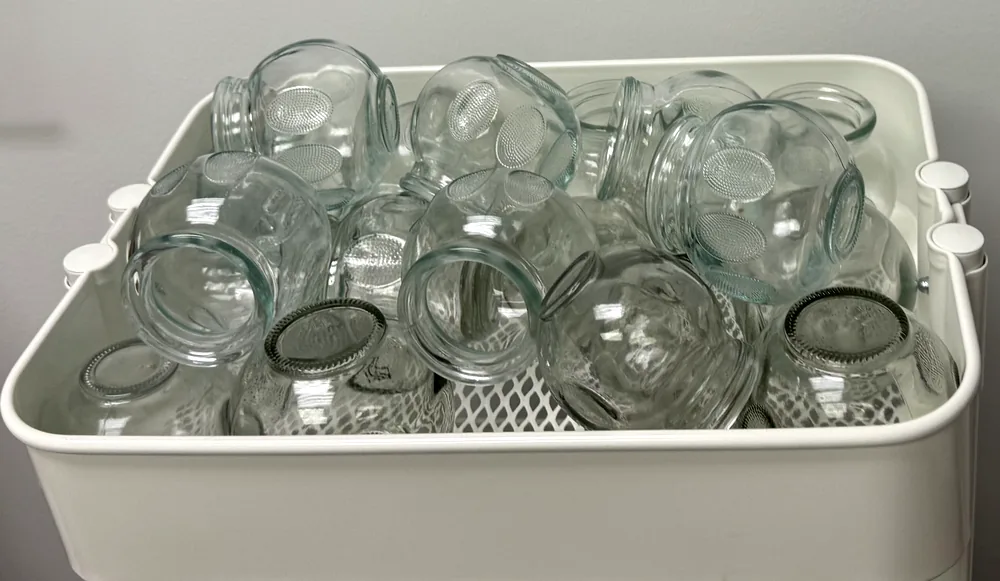
NCCIH records rare severe events: bleeding inside the skull after cupping on the scalp, and anemia from blood loss after repeated wet cupping. It also warns that cupping equipment can become contaminated with blood, so using the same equipment on more than one person without sterilization can spread bloodborne diseases such as hepatitis B and C. Asking any provider how cups are cleaned between clients is a fair question.
A sudden severe headache, confusion, chest pain or trouble breathing after any treatment is an emergency — call 911 rather than the clinic. The same split between common-and-mild and rare-and-serious runs through needling too; our guide to acupuncture side effects and safety lays it out with published frequencies.
— 06
Who should skip cupping, or ask first.
Cupping is not for everyone, and the reasons to pause run longer than most spa menus admit. Cleveland Clinic advises against cupping during pregnancy, and for people with anemia, a pacemaker, bleeding disorders such as hemophilia, clotting problems such as deep vein thrombosis (DVT) or a history of stroke, cardiovascular disease, skin conditions including eczema and psoriasis, or seizures.
A 2018 review in the Journal of Acupuncture and Meridian Studies adds detail on who and where:
- Blood thinners. The review lists anticoagulant use as a relative contraindication — a reason for caution and a conversation, not always a flat no. Expect heavier marks at the very least.
- Broken or inflamed skin. Cups should not go on open wounds, skin lesions, inflamed skin, fractures or varicose veins, nor directly over veins, arteries, nerves or lymph nodes.
- Cancer, or organ failure. The review treats cancer and heart, kidney or liver failure as absolute contraindications. Talk to your physician first.
- Acute infection or anemia. Both appear among its relative contraindications.
- Pregnancy. Cleveland Clinic's line is to avoid cupping while pregnant, and our pregnancy acupuncture page notes that massage add-ons are generally deferred during pregnancy. Prenatal massage stands on its own without them.
Say so before the cups come out. If your physician has advised against cupping, that advice outranks any spa menu, ours included.
How cupping is booked here
At Harmony, cupping is an add-on to any 60 minute massage at 1481 Chain Bridge Rd, Ste 300 in McLean: $20, or free for members. Membership simply means you have bought a package of 5 or more massage sessions — no fee, no signup. Massage starts at $100 for 60 minutes. The clinic is open 7 days, 9 AM to 9 PM, with free parking at the door; every rate is on the pricing page. Text 240-715-5939 and mention the date of any event you are planning around.
This article is general health education, not medical advice. Cupping marks are an expected result of suction; they are not a diagnosis, and their color is not evidence of toxins or illness. Burns, blisters, signs of infection or unexplained bruising deserve a clinician's attention.
— Questions
Asked & answered.
Are cupping marks the same as bruises?
Not quite. Both involve blood leaking from small vessels into the skin, and both fade through the same color changes. But a bruise usually comes from impact crushing tissue, while a cupping mark comes from suction lifting it. Cleveland Clinic puts it this way: the marks look like bruises but are not true bruises that injure muscle fibers. Most are painless or only mildly tender.
Do darker cupping marks mean I have more toxins?
No good evidence says so. A dark mark means more blood escaped the capillaries — which depends on suction strength, time under the cup, skin tone and medications that affect clotting. Traditional Chinese Medicine reads dark marks as stagnation, and we label that as tradition. Neither NCCIH nor Cleveland Clinic treats mark color as diagnostic, and nothing is being drawn out through the skin.
Can I get cupping a week before a wedding or a beach trip?
It is cutting it close. Cleveland Clinic expects the marks to fade within 1 to 2 weeks, so a week out risks visible rings on the day. If you still want it, ask for lighter suction or cups only where clothing will cover them. With less than a few days to go, skip the add-on — a 60 minute massage works without it.
Is it normal for cupping marks to itch or feel sore?
Mild itching and muscle soreness both appear on Cleveland Clinic's list of possible after-effects, along with fatigue, headache and nausea. They are usually minor. What is not normal: a blister, a burn, spreading redness, yellow discharge, fever, or pain that feels extreme. Any of those is a reason to call your health care provider rather than to wait it out.
Can I have cupping if I take blood thinners?
Ask first. A 2018 review lists anticoagulant use as a relative contraindication, and MedlinePlus lists blood thinners, antiplatelet medicines and aspirin among the causes of bleeding into the skin — so marks may be heavier and slower to fade. Tell your practitioner what you take, and check with the physician who prescribed it. Their answer outranks ours.
Why didn't my cupping leave any marks?
Because very little blood left the capillaries — which is common and normal. Light suction, a short time under the cups, gliding rather than stationary cups and individual skin all plausibly play a part. A missing mark says nothing about whether the session helped, and no good evidence treats it as a sign of either good or poor health.
— Research & references
NCCIH — Cupping
Cupping may help reduce pain, though the evidence is not very strong, and it can cause persistent discoloration, scars, burns and infections.
Cleveland Clinic — Cupping Therapy
Suction breaks open capillaries under the skin, leaving marks that should fade in a week or two; the page also lists who should avoid cupping.
Aboushanab & AlSanad — Cupping Therapy: An Overview from a Modern Medicine Perspective (2018)
Reports that most cupping adverse events appear mild to moderate and sets out absolute and relative contraindications, including anticoagulant use.
MedlinePlus — Bleeding into the skin
Defines petechiae and ecchymosis and lists medicines, including blood thinners and aspirin, that can make bleeding into the skin more likely.
Citations are summarized — please consult the original sources. This page is general health education, not medical advice for your specific case; results vary and acupuncture works best alongside, not instead of, care from your physician.
— Keep exploring
Service
Cupping Therapy
Fire and silicone cupping, the traditional color table, and add-on pricing.
Guide
Acupuncture Safety Guide
What is common, what is rare, and what to tell your practitioner first.
Service
Gua Sha & Hot Stone
The other two add-ons — $20 each with a massage, free for members.
Service
Massage & Bodywork
Every 60 minute massage that cupping can be added to, from $100.